 ChipApex | Global Electronic Components Supplier
SEARCH
Search Product
Search Post
— IC芯片 | 连接器 | 传感器 | 被动器件 —
Search productSearch post
— IC芯片 | 连接器 | 传感器 | 被动器件 —
Consult the customer manager about the wholesale price.
consultation hotline:86-132-6715-2157
email:[email protected]
Contact the product manager for consultation. One-stop consultation is available.
Do you want a lower wholesale price? Please send us your inquiry and we will reply immediately.
The TPS65262RHBT is a Power Management Integrated Circuit (PMIC) from Texas Instruments, housed in a 32-VQFN (5x5 mm) package. It integrates five output regulators: three synchronous buck converters and two low-dropout linear regulators (LDOs). The device operates with an input voltage range of 4.5V to 18V and supports a switching frequency of 600kHz. Output capabilities include one adjustable buck channel rated at 3A and two additional adjustable buck channels rated at 1A each. The LDO outputs provide stable regulation for sensitive loads. The component is designed for surface-mount installation and functions within a temperature range of -40°C to +85°C.
Verify the specific suffix RHBT against the official datasheet to confirm pin compatibility and thermal characteristics. Ensure the ordering information matches the required tape-and-reel quantity specifications. Cross-reference the manufacturer's latest revision history to account for any material or assembly site changes that may affect long-term availability or performance parameters.
Select this component when a design requires a combination of high-efficiency switching regulation and precise linear regulation within a limited board area. The integrated topology reduces external component count compared to discrete solutions. Consider the 600kHz switching frequency for balancing efficiency and passive size. Verify that the 3A peak current capability meets the maximum load transient requirements of the target application.
This part belongs to the TPS6526x family of PMICs, which are optimized for multi-rail power applications. It shares functional similarities with the TPS65262RHBR variant, differing primarily in packaging configuration. The series is commonly used in systems where space constraints and power density are critical design factors.
The TPS65262RHBR is a direct pin-compatible alternative with identical electrical specifications but differs in reel packaging. No other cross-model substitutes are officially confirmed as functionally equivalent without schematic redesign.
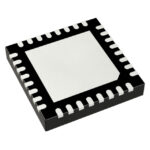 TPS65262RHBT
The activity of extra discounts on wholesale prices is in full swing…
Please fill in your contact information and we will send you the latest wholesale price list.





