 ChipApex | Global Electronic Components Supplier
SEARCH
Search Product
Search Post
— IC芯片 | 连接器 | 传感器 | 被动器件 —
Search productSearch post
— IC芯片 | 连接器 | 传感器 | 被动器件 —
Consult the customer manager about the wholesale price.
consultation hotline:86-132-6715-2157
email:[email protected]
Contact the product manager for consultation. One-stop consultation is available.
Do you want a lower wholesale price? Please send us your inquiry and we will reply immediately.
The TPS6565342RHDTQ1 is an automotive-grade dual synchronous buck converter from Texas Instruments, designed for high-efficiency power management. It features two independent channels, each capable of delivering up to 3 A of output current. The device operates with a fixed switching frequency of 4 MHz and accepts an input voltage range from 2.8 V to 5.5 V. Output voltages are adjustable from 1 V to 3.36 V per channel. It exhibits a low quiescent current of 9 uA and maintains a load regulation of 0.3%. The component is qualified under AEC-Q100 standards and functions within a temperature range of -40°C to +125°C.
Verify the complete part number including suffixes to ensure correct package and tape/reel specifications. Confirm that the procurement source provides valid traceability documentation required for automotive components. Check for moisture sensitivity level handling requirements prior to assembly. Ensure compatibility with the intended PCB footprint for the VQFN-EP-28 package. Validate that the supplier adheres to authorized distribution channels to prevent counterfeit risks.
Select this component when designing systems requiring two isolated or synchronized 3-A buck converters within a single package. The 4 MHz frequency is suitable for applications prioritizing small passive component sizes over ultra-low noise. Consider the 2.8 V minimum input voltage constraint against the system's battery or rail characteristics. Evaluate thermal dissipation requirements based on the VQFN-EP-28 package and expected load conditions. Verify that the 1 V to 3.36 V output range meets the specific voltage requirements of the downstream loads.
This device belongs to the TPS65653 series of automotive power management integrated circuits. It is specifically engineered for complex vehicle electronics where space constraints and high efficiency are critical. The series supports various configurations for powering digital logic, memory, and peripheral interfaces in modern automotive architectures.
Consult official Texas Instruments documentation for verified cross-reference part numbers. Ensure any substitute matches the pinout, electrical specifications, and automotive qualification status. Generic equivalents may not meet AEC-Q100 requirements or thermal performance standards.
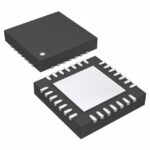 TPS6565342RHDTQ1
The activity of extra discounts on wholesale prices is in full swing…
Please fill in your contact information and we will send you the latest wholesale price list.





