 ChipApex | Global Electronic Components Supplier
SEARCH
Search Product
Search Post
— IC芯片 | 连接器 | 传感器 | 被动器件 —
Search productSearch post
— IC芯片 | 连接器 | 传感器 | 被动器件 —
Consult the customer manager about the wholesale price.
consultation hotline:86-132-6715-2157
email:[email protected]
Contact the product manager for consultation. One-stop consultation is available.
Do you want a lower wholesale price? Please send us your inquiry and we will reply immediately.
The TPS92001DGKR is a general-purpose PWM controller for LED lighting applications, manufactured by Texas Instruments. It operates in an 8-VSSOP package and supports flyback and buck topologies. The device features a 10V turn-on threshold and supports Triac dimming. Key electrical parameters include a switching frequency of 100 kHz, a maximum supply voltage of 21 V, and an output voltage of 5 V. It provides one channel with a maximum output current of 800 mA. The component functions within a junction temperature range of -40°C to 105°C.
Verify the specific ordering suffix DGKR against the manufacturer's official documentation to confirm the reel quantity and tape-and-reel packaging configuration. Ensure that the selected variant matches the required thermal performance and pinout specifications for the target PCB layout. Cross-reference the active status and any product change notifications to guarantee long-term availability and consistency with design requirements.
Select this component for designs requiring a single-channel LED driver with integrated Triac dimming capability. The 100 kHz switching frequency allows for compact magnetic component sizing. Consider the 8-VSSOP package constraints for thermal management and board space. Verify compatibility with the intended flyback or buck topology and ensure the input voltage range aligns with the system's power supply architecture.
The TPS92001DGKR belongs to the TPS92001 family of general-purpose LED lighting PWM controllers from Texas Instruments. This series is designed to simplify the development of efficient AC-DC LED drivers. The DGKR suffix specifically denotes the tape-and-reel packaging format, distinguishing it from tube-packaged variants like the TPS92001D. The family shares core functional characteristics optimized for cost-effective lighting solutions.
The TPS92001DGK is a compatible alternative in the same family, differing primarily in packaging (tube vs. reel). Both share identical electrical specifications and functionality. Verify that the chosen replacement meets the specific volume handling requirements of the assembly process.
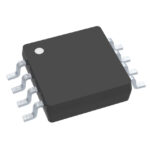 TPS92001DGKR
The activity of extra discounts on wholesale prices is in full swing…
Please fill in your contact information and we will send you the latest wholesale price list.





