 ChipApex | Global Electronic Components Supplier
SEARCH
Search Product
Search Post
— IC芯片 | 连接器 | 传感器 | 被动器件 —
Search productSearch post
— IC芯片 | 连接器 | 传感器 | 被动器件 —
Consult the customer manager about the wholesale price.
consultation hotline:86-132-6715-2157
email:[email protected]
Contact the product manager for consultation. One-stop consultation is available.
Do you want a lower wholesale price? Please send us your inquiry and we will reply immediately.
The TPS92020DR is a high-performance resonant-switching LED driver controller designed for multi-string LED lighting applications. It utilizes an LLC resonant switching topology to achieve high efficiency in higher power LED systems compared to traditional half-bridge converters. The device operates with an input voltage range of 11.5V to 18V and supports two outputs. It features a switching frequency of 350kHz and provides an output capability of 11V at 20mA. Packaged in an SOIC-8 format, it is suitable for demanding thermal environments.
Verify the specific suffix 'DR' indicates the tape and reel packaging variant when ordering. Confirm that the component meets RoHS compliance requirements for your target market. Ensure the SOIC-8 package dimensions align with your PCB layout constraints. Cross-reference the manufacturer part number with official Texas Instruments documentation to avoid counterfeit components. Validate that the input voltage specifications match your system design parameters before procurement.
Select this controller when designing LED drivers that require the efficiency benefits of LLC resonant topology rather than standard hard-switched methods. It is appropriate for applications needing dual-output capabilities within a compact SOIC-8 footprint. Consider the 11.5V to 18V input range compatibility with your power supply architecture. Evaluate the 350kHz switching frequency against EMI filtering requirements in your final assembly.
The TPS92020 belongs to Texas Instruments' portfolio of LED lighting driver controllers. It is distinct from other series like the TPS92023 by its specific resonant switching focus and input/output characteristics. The 'DR' suffix denotes the reel packaging configuration, distinguishing it from tube-packaged variants. This component addresses the need for efficient power conversion in modern LED infrastructure.
Consult official Texas Instruments substitution guides for verified alternatives. Generic cross-references may not replicate the specific LLC resonant control algorithms or electrical characteristics. Verify pin-to-pin compatibility and thermal performance if replacing existing inventory.
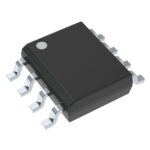 TPS92020DR
The activity of extra discounts on wholesale prices is in full swing…
Please fill in your contact information and we will send you the latest wholesale price list.





