 ChipApex | Global Electronic Components Supplier
SEARCH
Search Product
Search Post
— IC芯片 | 连接器 | 传感器 | 被动器件 —
Search productSearch post
— IC芯片 | 连接器 | 传感器 | 被动器件 —
Consult the customer manager about the wholesale price.
consultation hotline:86-132-6715-2157
email:[email protected]
Contact the product manager for consultation. One-stop consultation is available.
Do you want a lower wholesale price? Please send us your inquiry and we will reply immediately.
The TPS92074D is a non-isolated Buck Power Factor Correction (PFC) LED driver IC manufactured by Texas Instruments. It features digital reference control and supports analog, PWM, forward phase (Triac), and reverse phase dimming methods. The device operates within an input voltage range of 10.5 V to 18 V, delivering a maximum output current of 2 A. It functions at line frequencies between 45 Hz and 65 Hz with adjustable output voltage. The component is housed in an SOIC-8 package, operates from -40°C to +125°C, and includes short circuit and thermal protection.
Verify the specific suffix 'D' corresponds to the SOIC-8 surface-mount package configuration. Confirm that the required operating temperature range aligns with the specified -40°C to +125°C limits. Ensure the application design accounts for the non-isolated nature of the Buck PFC topology and validates compatibility with the supported dimming protocols such as forward phase or PWM.
Select this component for designs requiring integrated Buck PFC functionality without isolation requirements. It is suitable for applications needing support for various dimming standards including Triac and PWM. Consider the 2 A output current capability and the 10.5 V to 18 V input voltage window when defining system parameters. The SOIC-8 package offers a compact solution for space-constrained LED driver implementations.
The TPS92074D belongs to the TPS9207x series of LED drivers from Texas Instruments. This series focuses on non-isolated solutions combining power factor correction with constant current regulation. The device is designed to simplify AC/DC offline switcher step-down architectures for LED lighting, offering a consolidated approach to managing power quality and light output control in commercial and residential fixtures.
The TPS92075DR/NOPB is a related variant within the same family. Verify functional equivalence regarding output current capabilities and pinout compatibility before substitution. Ensure that any replacement maintains the required non-isolated Buck PFC architecture and supports the necessary dimming interfaces for the target application.
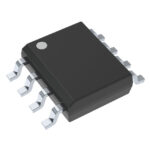 TPS92074D
The activity of extra discounts on wholesale prices is in full swing…
Please fill in your contact information and we will send you the latest wholesale price list.





