 ChipApex | Global Electronic Components Supplier
SEARCH
Search Product
Search Post
— IC芯片 | 连接器 | 传感器 | 被动器件 —
Search productSearch post
— IC芯片 | 连接器 | 传感器 | 被动器件 —
Consult the customer manager about the wholesale price.
consultation hotline:86-132-6715-2157
email:[email protected]
Contact the product manager for consultation. One-stop consultation is available.
Do you want a lower wholesale price? Please send us your inquiry and we will reply immediately.
The TPS92075DDC/NOPB is a non-isolated, phase-dimmable buck power factor correction (PFC) LED driver from Texas Instruments. It operates with an input voltage range of 11 V to 18 V and supports switching frequencies between 45 Hz and 64 Hz. The device features integrated digital reference control for precise regulation. It is housed in a compact SOT-23-Thin-6 surface-mount package. The component is designed for high-efficiency lighting applications, offering thermal shutdown protection and soft-start capabilities. It functions within an operating temperature range of -40°C to +125°C.
Verify the specific suffix 'DDC' corresponds to the SOT-23-Thin-6 package variant rather than the standard SOIC-8 version. Confirm RoHS compliance status and check for recent production lifecycle notices. Ensure the ordering code matches the required tape-and-reel quantity if applicable. Cross-reference the manufacturer's official datasheet to validate pinout compatibility for PCB layout design.
Select this component for applications requiring non-isolated topologies with integrated PFC functionality. It is suitable for designs needing digital phase-angle decoding without external microcontrollers. Consider the SOT-23-Thin-6 package constraints for space-limited boards. Evaluate thermal performance requirements given the high operating temperature range and potential heat dissipation in enclosed fixtures.
This part belongs to the TPS92075 family of LED drivers designed for universal AC input applications. It complements other variants like the TPS92075DR/NOPB, which utilizes an SOIC-8 package. The series focuses on simplifying design through integrated digital controls and phase-symmetry balancing. It targets cost-sensitive and space-constrained lighting solutions requiring high reliability.
The TPS92075DDCR/NOPB serves as a reel-pack alternative to the cut-tape or tube variant. Verify package dimensions and thermal characteristics when substituting with other SOT-23-THIN-6 devices. No direct cross-brand substitutes are confirmed in public documentation.
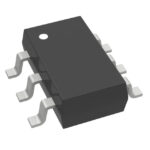 TPS92075DDC/NOPB
The activity of extra discounts on wholesale prices is in full swing…
Please fill in your contact information and we will send you the latest wholesale price list.





