 ChipApex | Global Electronic Components Supplier
SEARCH
Search Product
Search Post
— IC芯片 | 连接器 | 传感器 | 被动器件 —
Search productSearch post
— IC芯片 | 连接器 | 传感器 | 被动器件 —
Consult the customer manager about the wholesale price.
consultation hotline:86-132-6715-2157
email:[email protected]
Contact the product manager for consultation. One-stop consultation is available.
Do you want a lower wholesale price? Please send us your inquiry and we will reply immediately.
The TPS92310DGS/NOPB is an off-line primary side sensing controller with power factor correction, designed for driving high-power LEDs. It operates within an input voltage range of 13V to 35V and supports a maximum output current of 2A. The device features adjustable switching frequencies between 60kHz and 150kHz, with a typical quiescent current of 1.2mA. It utilizes adaptive on-time control and soft switching to enhance efficiency. The component functions in temperatures from -40°C to +125°C and employs analog dimming methods.
Verify the specific package variant, as the TPS92310 series includes multiple options such as VSSOP and MSOP configurations. Confirm that the NOPB suffix indicates lead-free and RoHS compliance. Ensure the selected part matches the required thermal performance for your operating environment. Cross-reference the datasheet revision date to confirm technical specifications align with your design requirements before finalizing procurement.
Select this component for applications requiring integrated PFC and primary side sensing to reduce bill of materials cost. It is suitable for designs needing analog dimming and operation up to 150kHz switching frequency. Consider the 8-pin or 10-pin package options based on PCB space constraints. Ensure the input voltage range of 13V to 35V aligns with your system's rectified line voltage.
This device belongs to Texas Instruments' family of off-line LED controllers. It is engineered specifically for single-output lighting applications where cost-effective regulation is critical. The controller replaces traditional secondary-side sensing solutions by deriving feedback information from the primary winding, simplifying the transformer design and reducing component count in high-power LED drivers.
Direct substitutes include other TPS9231x variants with different package options, such as TPS92310DGSR/NOPB for reel packaging. Verify pin compatibility and electrical parameters when considering alternative manufacturers. No direct cross-brand equivalents are officially confirmed in public documentation.
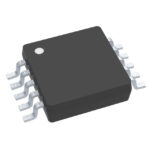 TPS92310DGS/NOPB
The activity of extra discounts on wholesale prices is in full swing…
Please fill in your contact information and we will send you the latest wholesale price list.





