 ChipApex | Global Electronic Components Supplier
SEARCH
Search Product
Search Post
— IC芯片 | 连接器 | 传感器 | 被动器件 —
Search productSearch post
— IC芯片 | 连接器 | 传感器 | 被动器件 —
Consult the customer manager about the wholesale price.
consultation hotline:86-132-6715-2157
email:[email protected]
Contact the product manager for consultation. One-stop consultation is available.
Do you want a lower wholesale price? Please send us your inquiry and we will reply immediately.
The TPS923655DRRR is a non-synchronous boost or buck-boost LED driver IC from Texas Instruments. It features an integrated switching FET and supports output currents up to 4 A with a maximum supply voltage of 65 V. The device operates within an input voltage range of 4.5 V to 65 V and delivers an output voltage between 0 V and 63 V. It functions at a programmable switching frequency ranging from 100 kHz to 2.2 MHz. The component is housed in a WSON-12 package and supports analog, flexible, hybrid, and PWM dimming methods. It operates reliably across a temperature range of -40°C to +125°C.
Verify the specific ordering suffix DRRR corresponds to the required tape and reel quantity of 3000 units. Confirm that the WSON-12 package dimensions align with the target PCB layout constraints. Ensure the design accounts for the non-synchronous topology characteristics when selecting external components. Validate that the thermal management strategy supports operation within the specified junction temperature limits under maximum load conditions.
Choose this component when application requirements demand high output current capability up to 4 A. Select this model if the power source voltage varies significantly relative to the LED forward voltage, necessitating buck-boost functionality. Consider this part for designs requiring integrated fault detection and protection without external discrete components. Evaluate the programmable frequency range to optimize filter size and efficiency for the specific system architecture.
This device belongs to the TPS9236xx series of LED drivers designed for robust performance in demanding environments. It complements other Texas Instruments power management solutions by providing specialized constant current regulation for LED loads. The integration of the switching FET reduces the bill of materials compared to discrete solutions. It serves as a key component in modern lighting architectures prioritizing reliability and compact form factors.
Public confirmed substitute part numbers are not available in the provided documentation.
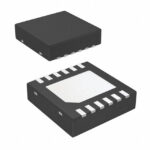 TPS923655DRRR
The activity of extra discounts on wholesale prices is in full swing…
Please fill in your contact information and we will send you the latest wholesale price list.





