 ChipApex | Global Electronic Components Supplier
SEARCH
Search Product
Search Post
— IC芯片 | 连接器 | 传感器 | 被动器件 —
Search productSearch post
— IC芯片 | 连接器 | 传感器 | 被动器件 —
Consult the customer manager about the wholesale price.
consultation hotline:86-132-6715-2157
email:[email protected]
Contact the product manager for consultation. One-stop consultation is available.
Do you want a lower wholesale price? Please send us your inquiry and we will reply immediately.
The TPW3188Q-TS3R-S is an automotive-grade single-pole octal-throw (SP8T) analog switch manufactured by 3PEAK. It supports supply voltages of 1.8 V, 2.5 V, 3.3 V, and 5 V with a bandwidth of 250 MHz. The device features low on-state resistance, typically 75 Ω at 5 V and 650 Ω at 1.8 V. Switching times are fast, with tON at 22 ns and tOFF at 8 ns. It includes three digital select inputs (S0, S1, S2), eight independent I/Os, and an active-low enable input (/EN). Qualified to AEC-Q100 Grade 1, it operates from -40°C to +125°C. The TS3R suffix indicates the TSSOP-16 package in tape and reel format.
Verify the specific ordering suffix matches the required package type. The TS3R suffix denotes the TSSOP-16 package configuration. Confirm that the component meets the necessary environmental standards for the target deployment environment before finalizing procurement orders.
Select this component when an 8-channel multiplexer is required in an automotive or industrial setting. Ensure the system supply voltage aligns with the desired on-resistance performance. Verify that the TSSOP-16 package dimensions fit the PCB layout constraints compared to the QFN alternative.
This part belongs to the TPW3188Q series of general-purpose analog switches designed for harsh environments. It serves as a direct pin-to-pin replacement for the industry-standard TPW4051, facilitating easier migration for existing designs while offering automotive-grade reliability enhancements.
The datasheet explicitly identifies the TPW4051 as a compatible industry version for pin-to-pin replacement. Designers migrating from other SP8T devices should verify thermal characteristics and exact on-resistance tolerances against the original component specifications.
The /EN pin is an active-low digital enable input. When held HIGH, all internal switches are turned off, isolating the common port from the channels.
No, the TPW3188Q is a single-pole device. It connects only one of the eight independent channels (A0-A7) to the common port (D) at any given time based on the S0, S1, and S2 logic states.
It ensures that the previous channel disconnects before the new channel connects. This prevents momentary short circuits between channels during switching operations, protecting downstream components.
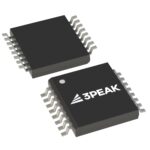 TPW3188Q-TS3R-S
The activity of extra discounts on wholesale prices is in full swing…
Please fill in your contact information and we will send you the latest wholesale price list.





