 ChipApex | Global Electronic Components Supplier
SEARCH
Search Product
Search Post
— IC芯片 | 连接器 | 传感器 | 被动器件 —
Search productSearch post
— IC芯片 | 连接器 | 传感器 | 被动器件 —
Consult the customer manager about the wholesale price.
consultation hotline:86-132-6715-2157
email:[email protected]
Contact the product manager for consultation. One-stop consultation is available.
Do you want a lower wholesale price? Please send us your inquiry and we will reply immediately.
The TS3003ITD1033T is a single-supply oscillator/timer from Silicon Labs, operating within a voltage range of 1.55V to 5.25V. It consumes an ultra-low supply current of 1.9µA at 25kHz and supports output frequencies between 9kHz and 300kHz with a period accuracy of 3%. The device features separate PWM control and buffered CMOS outputs (FOUT and PWMOUT) with a driver resistance of 160Ω. Frequency is set by a single external resistor on the RSET pin, while pulse width modulation is controlled via the CPWM pin. It operates over a temperature range of -40°C to +85°C in a 10-pin TDFN package.
Verify component authenticity through authorized channels as the TS3003ITD1033T may be subject to End-of-Life status or discontinuation notices. Confirm that the specific ordering suffix corresponds to the tape and reel packaging format containing 3000 units per carrier. Ensure compliance with RoHS standards and lead-free packaging requirements specified by the manufacturer.
Select this component when low power consumption and minimal PCB area are critical constraints. The output frequency must be programmed using a high-precision resistor (1% tolerance recommended) connected to the RSET pin. For PWM functionality, ensure the CPWM capacitor value does not exceed the FOUT period to maintain proper operation. Consider the 160Ω output drive capability when designing load circuits.
The TS3003 belongs to Silicon Labs' second-generation NanoWatt Analog CMOS timer family, joining the TS3001, TS3002, TS3004, and TS3006 models. It offers significant reductions in PCB area and power consumption compared to industry-standard 555-timer-based products. The ITD1033T designation indicates the industrial temperature grade (-40°C to +85°C) and the specific TDFN package configuration.
Publicly confirmed substitute part numbers are not available in the provided documentation. Designers should evaluate generic CMOS timers or other members of the TS300x family based on specific frequency and power requirements, noting potential differences in package dimensions and electrical characteristics.


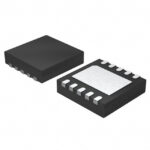 TS3003ITD1033T
The activity of extra discounts on wholesale prices is in full swing…
Please fill in your contact information and we will send you the latest wholesale price list.



