 ChipApex | Global Electronic Components Supplier
SEARCH
Search Product
Search Post
— IC芯片 | 连接器 | 传感器 | 被动器件 —
Search productSearch post
— IC芯片 | 连接器 | 传感器 | 被动器件 —
Consult the customer manager about the wholesale price.
consultation hotline:86-132-6715-2157
email:[email protected]
Contact the product manager for consultation. One-stop consultation is available.
Do you want a lower wholesale price? Please send us your inquiry and we will reply immediately.
The TS3A27518EIRTWRQ1 is a low-voltage analog switch manufactured by Texas Instruments, designed for automotive applications under the AEC-Q100 qualification standard. It integrates six independent single-pole double-throw (SPDT) switches within a single package, offering a 6x2:1 multiplexing configuration. The device operates on a supply voltage range of 1.65 V to 3.6 V and features a maximum on-resistance of 7.6 Ohms. Key electrical parameters include a bandwidth of 240 MHz, a maximum operating frequency of 68 ns, and an off-time of 70 ns. It is housed in a WQFN-24 package and supports a wide operating temperature range from -40°C to +105°C.
Verify the specific suffix EIRTWRQ1 against the manufacturer's official datasheet to confirm the exact tape-and-reel packaging quantity and moisture sensitivity level. Ensure the component meets the required RoHS compliance standards for your assembly process. Cross-reference the ordering part number with authorized distributors to validate authenticity and traceability before procurement.
Select this component when a compact solution for multiple SPDT switching paths is required in low-voltage environments. The WQFN-24 package provides a small footprint ideal for space-constrained designs. Consider the 7.6 Ohm on-resistance limit for signal integrity requirements and ensure the 1.65 V minimum supply voltage aligns with the system power rails.
This part belongs to the TS3A27518E series of analog switches from Texas Instruments. It is specifically engineered for high-volume consumer and automotive electronics where size and power efficiency are critical. The Q1 suffix indicates its qualification for automotive applications, distinguishing it from commercial grade variants within the same functional family.
Check for direct pin-compatible alternatives such as the TS3A27518ERTWRG4 for non-automotive versions. Verify that any substitute maintains the 1.65 V to 3.6 V supply range and WQFN-24 package dimensions to ensure mechanical compatibility without PCB redesign.
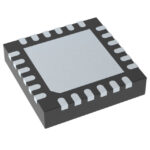 TS3A27518EIRTWRQ1
The activity of extra discounts on wholesale prices is in full swing…
Please fill in your contact information and we will send you the latest wholesale price list.





