 ChipApex | Global Electronic Components Supplier
SEARCH
Search Product
Search Post
— IC芯片 | 连接器 | 传感器 | 被动器件 —
Search productSearch post
— IC芯片 | 连接器 | 传感器 | 被动器件 —
Consult the customer manager about the wholesale price.
consultation hotline:86-132-6715-2157
email:[email protected]
Contact the product manager for consultation. One-stop consultation is available.
Do you want a lower wholesale price? Please send us your inquiry and we will reply immediately.
The TS3A44159RSVRG4 is a quad single-pole double-throw (SPDT) analog switch manufactured by Texas Instruments. It integrates four independent channels configured as 2:1 multiplexers or demultiplexers, controlled by two logic inputs. The device operates on a single supply voltage ranging from 1.65 V to 4.3 V. Key electrical specifications include a maximum on-resistance of 0.45 ohms, a maximum operating frequency of 35 MHz, and a maximum propagation delay of 23 ns. The component supports a continuous DC current of 100 mA per channel and features low power consumption with a maximum supply current of 700 nA. It is housed in a 16-pin VQFN package and functions within an industrial temperature range of -40°C to +85°C.
Verify the specific suffix RSVRG4 against the manufacturer's official documentation to confirm the exact tape-and-reel packaging quantity and moisture sensitivity level. Ensure the ordering information matches the required RoHS compliance status and lead time requirements specified in the latest datasheet revision before finalizing procurement orders.
Select this component when a quad-channel SPDT configuration is required within a compact VQFN-16 footprint. It is suitable for applications demanding low on-resistance and operation below 4.3 V. Compare performance metrics such as leakage current and bandwidth against alternative TI series like the TS5A or TS3A families if higher channel counts or different voltage ranges are needed.
The TS3A44159 belongs to Texas Instruments' family of low-voltage analog switches designed for portable electronics. It shares functional similarities with other quad-channel SPDT devices but distinguishes itself through its specific 0.45-ohm on-resistance and 35 MHz bandwidth. The part is commonly used in smartphones and tablets where space constraints and power efficiency are critical design factors.
Direct pin-compatible alternatives within the same family include the TS3A44159PWR and TS3A44159RGTR. Verify that substitute packages match the thermal and mechanical requirements of the existing PCB layout.
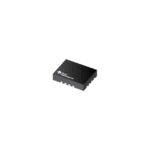 TS3A44159RSVRG4
The activity of extra discounts on wholesale prices is in full swing…
Please fill in your contact information and we will send you the latest wholesale price list.





