 ChipApex | Global Electronic Components Supplier
SEARCH
Search Product
Search Post
— IC芯片 | 连接器 | 传感器 | 被动器件 —
Search productSearch post
— IC芯片 | 连接器 | 传感器 | 被动器件 —
Consult the customer manager about the wholesale price.
consultation hotline:86-132-6715-2157
email:[email protected]
Contact the product manager for consultation. One-stop consultation is available.
Do you want a lower wholesale price? Please send us your inquiry and we will reply immediately.
The TS3A5017RSVR is a dual-channel analog switch IC from Texas Instruments, configured as two independent SP4T (Single Pole Four Throw) switches. It operates on a single supply voltage ranging from 2.3 V to 3.6 V. The device features a maximum on-resistance of 16 Ohms and supports a continuous DC switch current of 100 mA. Key timing parameters include a maximum turn-on time of 9.5 ns and a maximum turn-off time of 3.5 ns. It draws a maximum supply current of 7 uA and functions within an operating temperature range of -40°C to +85°C. The component is housed in a 16-UQFN package with dimensions of 2.6x1.8 mm.
Verify the specific suffix RSVR corresponds to the UQFN-16 package and reel packaging configuration. Confirm RoHS compliance status through official manufacturer documentation prior to integration. Ensure the single-supply voltage requirements align with the target system's power rails. Validate thermal performance within the specified industrial temperature range during final assembly planning.
Select this component when dual independent SP4T switching is required within a limited voltage window. Compare against TS3A5017DR or TS3A5017PWR if alternative packages like SOIC-16 or TSSOP-16 are preferred for manufacturing compatibility. Consider the TS3A5018 series if quad SPDT configuration is needed instead of dual SP4T. Evaluate channel count and package footprint constraints against available PCB real estate.
This part belongs to the TS3A5017 family of analog switches designed for portable applications. It shares core electrical characteristics with variants such as TS3A5017DR and TS3A5017PWR, differing primarily in package type and reel specifications. The RS designation indicates the UQFN package style, distinguishing it from larger footprint alternatives while maintaining identical functional performance.
TS3A5017DR offers identical electrical specifications in an SOIC-16 package. TS3A5017PWR provides the same functionality in a TSSOP-16 package. Verify pinout compatibility and thermal dissipation requirements when substituting between these package variants.
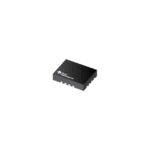 TS3A5017RSVR
The activity of extra discounts on wholesale prices is in full swing…
Please fill in your contact information and we will send you the latest wholesale price list.





