 ChipApex | Global Electronic Components Supplier
SEARCH
Search Product
Search Post
— IC芯片 | 连接器 | 传感器 | 被动器件 —
Search productSearch post
— IC芯片 | 连接器 | 传感器 | 被动器件 —
Consult the customer manager about the wholesale price.
consultation hotline:86-132-6715-2157
email:[email protected]
Contact the product manager for consultation. One-stop consultation is available.
Do you want a lower wholesale price? Please send us your inquiry and we will reply immediately.
The TS3A5223RSWR is a dual single-pole double-throw (SPDT) analog switch manufactured by Texas Instruments. It features a low on-resistance of 0.5 ohms and supports bidirectional signal switching. The device operates within a supply voltage range of 1.6 V to 5.5 V, ensuring compatibility with various digital logic families. It includes an active-low enable input for power management. The component is housed in a 10-pin VSSOP package, designed for surface-mount applications. It offers high bandwidth and low charge injection, making it suitable for precision signal routing in portable electronics.
Verify the specific suffix RSWR against the manufacturer's official datasheet to confirm the package type and tape-and-reel specifications. Ensure that the ordering information matches the exact electrical characteristics required for the target application. Cross-reference the part number with authorized distributors to confirm authenticity and current availability status before finalizing procurement decisions.
Select this component when a dual-channel SPDT switch with very low on-resistance is required. It is appropriate for designs operating between 1.6 V and 5.5 V. Consider the VSSOP package size for space-constrained layouts. Verify that the bidirectional nature of the switch aligns with the signal flow requirements of the specific circuit topology being implemented.
This part belongs to the TS3A series of analog switches from Texas Instruments. The series focuses on low-power, low-on-resistance solutions for portable applications. The TS3A5223 variant specifically provides dual channels, distinguishing it from single-channel or quad-channel counterparts in the same family. It is engineered for high performance in mobile and consumer electronic environments.
Consult the Texas Instruments product selection guide for direct functional equivalents. Potential substitutes may include other dual SPDT switches from the TS3A family with similar voltage ratings and package dimensions. Verify pin-to-pin compatibility and electrical parameter alignment before substitution.
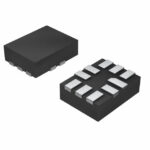 TS3A5223RSWR
The activity of extra discounts on wholesale prices is in full swing…
Please fill in your contact information and we will send you the latest wholesale price list.





