ChipApex | Global Electronic Components Supplier
SEARCH
Search Product
Search Post
— IC芯片 | 连接器 | 传感器 | 被动器件 —
Search productSearch post
— IC芯片 | 连接器 | 传感器 | 被动器件 —
Consult the customer manager about the wholesale price.
consultation hotline:86-132-6715-2157
email:[email protected]
Contact the product manager for consultation. One-stop consultation is available.
Do you want a lower wholesale price? Please send us your inquiry and we will reply immediately.
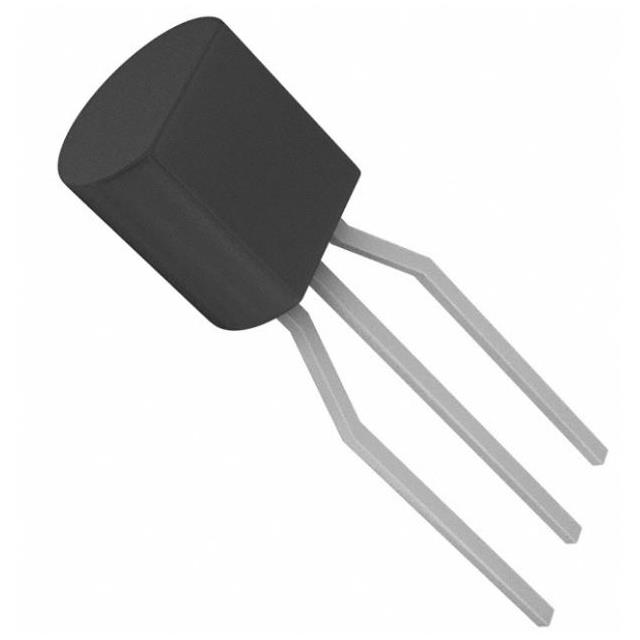
The TS431ACT B0G is a low-voltage, three-terminal adjustable shunt voltage reference from Taiwan Semiconductor. It operates within a voltage range of 1.24 V to 6 V and supports cathode currents from 60 μA to 30 mA. The device features a typical output impedance of 0.2 Ω and a temperature coefficient of 100 ppm/°C. It offers voltage precision options including 2%, 1%, and 0.5%. The component is typically stable with any capacitive loads and includes ESD protection rated at 2 kV for human body model and 200 V for machine model.
Verify the specific suffix (B0G) against official Taiwan Semiconductor documentation to confirm package type and tape/reel specifications. Ensure the selected variant matches the required voltage tolerance and operating temperature range for your design. Cross-reference the manufacturer part number with authorized distributors to avoid counterfeit components. Confirm that the automotive qualification status applies to the exact part number ordered.
Select this component when a low-voltage adjustable reference is needed for 3.3 V systems. It serves as a lower voltage alternative to TL431 devices. Consider the 1% or 0.5% precision variants if tight voltage regulation is required. Verify compatibility with optocoupler driving requirements due to its suitability for such applications. Check thermal performance against the 100 ppm/°C temperature coefficient specification.
The TS431 series comprises monolithic IC voltage references functioning as programmable shunt regulators. These devices are designed for low-temperature drift applications. The TS431ACT B0G represents a specific configuration within this family, offering enhanced performance over standard TL431 counterparts in low-voltage scenarios. It is part of Taiwan Semiconductor's portfolio of power management integrated circuits.
Public confirmed substitute part numbers include TS431ACT A3G and TS431BCT B0G. Compare pinout and electrical parameters before substitution. Ensure the replacement maintains the required voltage precision and operating current range. Verify package compatibility if mechanical constraints exist.
 TS431ACT B0G
The activity of extra discounts on wholesale prices is in full swing…
Please fill in your contact information and we will send you the latest wholesale price list.