 ChipApex | Global Electronic Components Supplier
SEARCH
Search Product
Search Post
— IC芯片 | 连接器 | 传感器 | 被动器件 —
Search productSearch post
— IC芯片 | 连接器 | 传感器 | 被动器件 —
Consult the customer manager about the wholesale price.
consultation hotline:86-132-6715-2157
email:[email protected]
Contact the product manager for consultation. One-stop consultation is available.
Do you want a lower wholesale price? Please send us your inquiry and we will reply immediately.
The TS4436AICT is a four-terminal shunt voltage reference IC manufactured by STMicroelectronics, designed for low-voltage Switch Mode Power Supplies (SMPS). It integrates a 0.6V internal reference, an amplifier, and an open-collector output transistor. The device maintains feedback voltage at the REF pin in closed-loop configurations. Key electrical parameters include a minimum output voltage of 0.6V, a maximum adjustable output of 1.8V, and a typical supply current consumption of 150µA. It features a temperature coefficient of 150ppm/°C and an accuracy tolerance of ±0.5%. The component operates within a supply voltage range starting at 1.7V and supports an industrial temperature range from -40°C to +105°C.
Verify the specific suffix 'A' indicates the ±0.5% tolerance grade when sourcing, as standard variants may differ. Confirm the SC-70-5 or TSSOP-5 package availability matches your PCB footprint requirements. Ensure the operating environment stays within the specified -40°C to +105°C industrial temperature range for guaranteed performance. Cross-reference the datasheet revision date to ensure compatibility with your design specifications.
Select the TS4436AICT when designing low-voltage SMPS architectures requiring output regulation up to 1.8V. Its low supply current makes it suitable for battery-powered or energy-efficient systems. The open-collector output allows flexible interfacing with various logic levels. Consider the ±0.5% accuracy for applications demanding tighter voltage stability compared to standard tolerance devices.
The TS4436 series serves as a low-cost alternative to traditional three-terminal references like the TL431 in low-voltage applications. Unlike standard references, it is optimized for operation down to 1.7V, enabling regulation of outputs below 2V. The integration of the reference and driver reduces component count in compact power supply designs.
The TS4436ICT is a compatible variant with ±1% tolerance instead of ±0.5%. Other shunt references with similar low-voltage capabilities may require verification of saturation voltage and current limits.
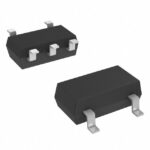 TS4436AICT
The activity of extra discounts on wholesale prices is in full swing…
Please fill in your contact information and we will send you the latest wholesale price list.






