 ChipApex | Global Electronic Components Supplier
SEARCH
Search Product
Search Post
— IC芯片 | 连接器 | 传感器 | 被动器件 —
Search productSearch post
— IC芯片 | 连接器 | 传感器 | 被动器件 —
Consult the customer manager about the wholesale price.
consultation hotline:86-132-6715-2157
email:[email protected]
Contact the product manager for consultation. One-stop consultation is available.
Do you want a lower wholesale price? Please send us your inquiry and we will reply immediately.
The TS5USBC412YFFT is a USB interface integrated circuit manufactured by Texas Instruments, belonging to the TS5USBC41 series. It functions as a dual 2:1 USB 2.0 multiplexer/demultiplexer or a single enhanced universal asynchronous receiver/transmitter (UART) switch. The device supports High Speed (HS) data rates compliant with USB 2.0 standards and features a 1.1 GHz -3dB bandwidth. It operates within a supply voltage range of 2.3 V to 5.5 V, typically at 3.3 V, with a maximum on-resistance of 9 ohms. The component is housed in a 12-DSBGA package, suitable for surface mount installation, and supports bidirectional signal transmission.
Verify the specific suffix YFFT against official Texas Instruments documentation to confirm the tape and reel packaging format and pin assignment. Ensure compatibility with the target PCB footprint for the 12-DSBGA package. Cross-reference the RoHS compliance status and moisture sensitivity level requirements with the project specifications before finalizing procurement orders.
Select this component when a compact solution is required for routing dual USB 2.0 High Speed signals or an enhanced UART interface. The low on-resistance and wide supply voltage range make it suitable for battery-powered applications. Compare performance metrics such as bandwidth and leakage current against alternative switches if signal integrity constraints are critical for the specific application environment.
This part belongs to the TS5USBC41 family of USB switches from Texas Instruments. It shares architectural similarities with variants like the TS5USBC410 and TS5USBC412YFFR, differing primarily in packaging and specific electrical characteristics defined by the manufacturer. The DSBGA-12 package provides a small form factor compared to larger QFN or WSON options found in other interface IC families.
The TS5USBC412YFFR is a documented variant within the same product family, offering similar functionality but potentially differing in packaging or reel specifications. Verify pin-to-pin compatibility and electrical parameter equivalence before substituting.
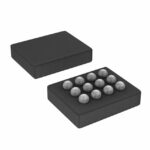 TS5USBC412YFFT
The activity of extra discounts on wholesale prices is in full swing…
Please fill in your contact information and we will send you the latest wholesale price list.





