 ChipApex | Global Electronic Components Supplier
SEARCH
Search Product
Search Post
— IC芯片 | 连接器 | 传感器 | 被动器件 —
Search productSearch post
— IC芯片 | 连接器 | 传感器 | 被动器件 —
Consult the customer manager about the wholesale price.
consultation hotline:86-132-6715-2157
email:[email protected]
Contact the product manager for consultation. One-stop consultation is available.
Do you want a lower wholesale price? Please send us your inquiry and we will reply immediately.
The TSCS42A1X1NLGXZAX is a low-power, high-fidelity integrated CODEC featuring 32-bit stereo playback and record functionality. It integrates a true cap-less headphone amplifier and a filterless DDX™ Class-D speaker driver delivering 3W per channel into 4Ω loads. The device supports sample rates from 8kHz to 96kHz with digital audio interfaces including I2S, Left-Justified, Right-Justified, and Bluetooth PCM modes. Key electrical specifications include 124dB SNR for DACs and 90dB SNR for ADCs. Power management allows operation with a 1.8V digital supply and a 1.7V analog supply.
Verify the specific ordering suffix against official documentation to confirm package type and temperature grade. Confirm RoHS compliance status and moisture sensitivity level prior to assembly planning. Ensure the component matches the exact part number required for the design to avoid pinout discrepancies between similar series variants.
Select this component for designs requiring integrated DSP-based audio processing alongside power-efficient amplification. The device is suitable for battery-operated systems due to its low standby power consumption and flexible voltage requirements. Verify that the host processor supports the required digital audio interface formats and I2C control protocol.
This model belongs to the TSCS42xx family of portable consumer codecs manufactured by Tempo Semiconductor. The family shares common architectural features but varies in pin configurations and specific output capabilities. The TSCS42A1 variant specifically denotes the pinout configuration for the 48-lead QFN package.
Direct substitutes within the same family include the TSCS42A2X1NLGXZAX. Verify pin compatibility and feature parity before substitution, as differences may exist in GPIO assignments or specific amplifier configurations between the A1 and A2 variants.
The filterless DDX™ Class-D speaker driver delivers 3W per channel into a 4Ω load and 1.5W per channel into an 8Ω load.
Yes, the TSCS42A1 includes support for one stereo digital microphone (DMIC) input.
The Audio Output Processing (AOP) DSP engine is tuned using the Windows-based Tempo ASC GUI software, allowing designers to adjust parameters for equalization, compression, and spatial effects.
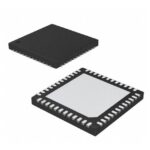 TSCS42A1X1NLGXZAX
The activity of extra discounts on wholesale prices is in full swing…
Please fill in your contact information and we will send you the latest wholesale price list.






