 ChipApex | Global Electronic Components Supplier
SEARCH
Search Product
Search Post
— IC芯片 | 连接器 | 传感器 | 被动器件 —
Search productSearch post
— IC芯片 | 连接器 | 传感器 | 被动器件 —
Consult the customer manager about the wholesale price.
consultation hotline:86-132-6715-2157
email:[email protected]
Contact the product manager for consultation. One-stop consultation is available.
Do you want a lower wholesale price? Please send us your inquiry and we will reply immediately.
The TUSB1004IRNQT is a quad-channel linear redriver supporting USB 3.2 Gen1 (5 Gbps) and Gen2 (10 Gbps) standards. It operates from a single 3.3 V supply with a voltage range of 3.0 V to 3.6 V. The device features adaptive receiver equalization (AEQ) with up to 16 settings providing up to 12 dB gain at 5 GHz. It supports two independent USB Type-A ports, configurable via I2C or pin-strap modes. Active power consumption is typically 550 mW for dual ports, while disabled power is 0.130 mW. Operating temperatures range from -40°C to +85°C for the 'I' suffix variant.
Verify the specific temperature grade required for the application environment. The 'I' suffix indicates an extended operating range of -40°C to +85°C, whereas the standard version covers 0°C to 70°C. Confirm package availability in the 40-pin WQFN format and ensure I2C address configurations match the system design constraints before ordering.
Select this component when signal integrity degradation requires active compensation for USB 3.2 channels. Ensure the host controller supports the required data rates and that the PCB layout accommodates the necessary AC coupling capacitors. Verify that the I2C bus capacitance limits are respected if using digital configuration rather than pin-strapping.
This part belongs to the TUSB1004 family of USB 3.2 linear redrivers designed for Type-A receptacles. It serves as a signal conditioning bridge between host controllers and USB connectors, compensating for channel loss in high-speed differential pairs. The device integrates thermal management capabilities within its compact WQFN footprint.
Public confirmed substitute part numbers: None identified in verified documentation.
The Adaptive Equalizer (AEQ) automatically determines the best Inter-Symbol Interference (ISI) compensation settings between the TUSB1004 and the USB device plugged into the connector, improving interoperability without manual tuning.
The device supports an I2C clock frequency of up to 1 MHz.
Yes, for ports facing the system (SSRX1/2 transmitters), the user can choose between linear redriver mode or limited redriver mode.
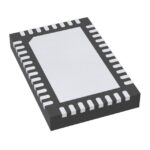 TUSB1004IRNQT
The activity of extra discounts on wholesale prices is in full swing…
Please fill in your contact information and we will send you the latest wholesale price list.




