 ChipApex | Global Electronic Components Supplier
SEARCH
Search Product
Search Post
— IC芯片 | 连接器 | 传感器 | 被动器件 —
Search productSearch post
— IC芯片 | 连接器 | 传感器 | 被动器件 —
Consult the customer manager about the wholesale price.
consultation hotline:86-132-6715-2157
email:[email protected]
Contact the product manager for consultation. One-stop consultation is available.
Do you want a lower wholesale price? Please send us your inquiry and we will reply immediately.
The TUSB1046AI-DCIRNQT is a USB Type-C DisplayPort Alternate Mode linear retimer and crosspoint switch manufactured by Texas Instruments. It supports USB 3.1 data rates up to 10 Gbps and provides four downstream DisplayPort 1.4 channels with data rates up to 8.1 Gbps. The device complies with USB Type-C Specification Revision 1.1, supporting Configuration C, D, E, and F roles. It operates within an industrial temperature range of -40°C to +85°C. The component includes multiple receiver linear equalization levels to mitigate inter-symbol distortion caused by cable or PCB trace losses.
Verify the specific suffix 'AI' confirms the industrial temperature grade (-40°C to +85°C) against the commercial variant (TUSB1046). Confirm the RNQT package designation matches the required reel quantity and tape specifications for automated assembly lines. Ensure the source document explicitly lists this exact part number to avoid confusion with similar retimers like the TUSB546A.
Select this component when designing systems that require both USB 3.1 data connectivity and DisplayPort 1.4 video output through a single USB Type-C connector. The integrated retimer function makes it suitable for applications where passive copper cables exceed standard length limits or where PCB trace lengths introduce significant attenuation. Verify that the host controller supports the necessary alternate mode protocols.
This device belongs to the TUSB1046 family of USB Type-C interface controllers. It serves as a bridge between USB Type-C sources and DisplayPort sinks, enabling multi-function connectivity. The AI suffix denotes the industrial temperature rating, distinguishing it from the commercial grade version which operates from 0°C to 70°C. It is designed to simplify board layout by integrating retiming and switching functions.
Publicly confirmed direct substitutes are not available in the provided documentation. The TUSB1046-DCI is the commercial grade equivalent. Other Texas Instruments retimers such as the TUSB546A serve different protocol requirements and are not pin-compatible or functionally identical replacements.
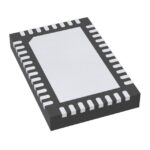 TUSB1046AI-DCIRNQT
The activity of extra discounts on wholesale prices is in full swing…
Please fill in your contact information and we will send you the latest wholesale price list.





