 ChipApex | Global Electronic Components Supplier
SEARCH
Search Product
Search Post
— IC芯片 | 连接器 | 传感器 | 被动器件 —
Search productSearch post
— IC芯片 | 连接器 | 传感器 | 被动器件 —
Consult the customer manager about the wholesale price.
consultation hotline:86-132-6715-2157
email:[email protected]
Contact the product manager for consultation. One-stop consultation is available.
Do you want a lower wholesale price? Please send us your inquiry and we will reply immediately.
The TUSB1104RNQR is a 10Gbps USB 3.2 x2 adaptive linear redriver designed for USB Type-C applications, enabling up to 20Gbps total data throughput. It operates from a single 3.3V supply and supports USB 3.2 Gen2 (10Gbps) and Gen1 (5Gbps), including low power states Disconnect, U1, U2, and U3. The device incorporates adaptive receiver equalization (AEQ) to automatically determine optimal ISI compensation settings between the redriver and connected USB devices. It features 16 EQ settings providing up to 12dB gain at 5GHz and allows configuration via I2C or pin-strap methods with selectable 1.8V or 3.3V I2C levels. The component is housed in a 40-pin WQFN package measuring 6mm by 4mm.
Verify the specific ordering suffix RNQR corresponds to the required temperature range and packaging format before procurement. Confirm that the selected variant matches the intended operating environment specifications outlined in the official datasheet. Ensure compatibility with system voltage requirements and interface standards during the purchasing process.
Select the TUSB1104RNQR when designing systems requiring high-speed USB 3.2 x2 connectivity within USB Type-C receptacles. Consider the device's ability to operate as a bridge between host ports and USB-C connectors. Evaluate the need for adaptive equalization features to maintain signal integrity across varying channel lengths and connector types in the target application design.
This component belongs to Texas Instruments' lineup of USB interface integrated circuits focused on signal integrity enhancement. It functions specifically as a linear redriver to extend the reach of high-speed differential signals. The device addresses the increasing demand for reliable data transmission in modern computing platforms utilizing USB Type-C standards.
Consult the manufacturer's documentation for officially confirmed substitute part numbers. Verify functional equivalence regarding pinout, electrical characteristics, and thermal performance before implementing any alternative components in existing designs.
The device utilizes adaptive receiver equalization (AEQ) to automatically determine the best intersymbol interference (ISI) compensation settings between the redriver and the connected USB device.
Configuration can be performed using an I2C interface or through hardware pin-strap selection, allowing flexibility in system design.
Yes, it supports USB 3.2 low power states including Disconnect, U1, U2, and U3 to optimize energy consumption.
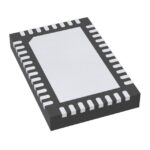 TUSB1104RNQR
The activity of extra discounts on wholesale prices is in full swing…
Please fill in your contact information and we will send you the latest wholesale price list.





