 ChipApex | Global Electronic Components Supplier
SEARCH
Search Product
Search Post
— IC芯片 | 连接器 | 传感器 | 被动器件 —
Search productSearch post
— IC芯片 | 连接器 | 传感器 | 被动器件 —
Consult the customer manager about the wholesale price.
consultation hotline:86-132-6715-2157
email:[email protected]
Contact the product manager for consultation. One-stop consultation is available.
Do you want a lower wholesale price? Please send us your inquiry and we will reply immediately.
The TUSB1104RNQT is a USB Type-C 10Gbps USB 3.2 x2 adaptive linear redriver manufactured by Texas Instruments. It supports data rates of 5Gbps and 10Gbps, enabling up to 20Gbps total throughput. The device operates from a single 3.3V supply within a 40-pin WQFN package (6mm × 4mm). Key electrical parameters include an active power consumption of 550mW typical, disconnect power of 1.5mW, and disabled power of 0.130mW. It features 16 EQ settings providing up to 12dB gain at 5GHz. Configuration is achieved via I2C or pin-strap modes with selectable 1.8V or 3.3V I2C levels.
Verify the specific ordering suffix RNQT corresponds to the standard commercial temperature range (0°C to 70°C) as defined in the manufacturer's orderable addendum. Confirm that the component matches the exact datasheet revision SLLSFL1A to ensure compatibility with design specifications. Cross-reference the part number against official distributor catalogs to validate authenticity and current production status before finalizing procurement plans.
Select this component when designing systems requiring USB Type-C connectivity with high-speed data transmission capabilities up to 20Gbps. Ensure the application environment accommodates the specified operating temperature range and single 3.3V supply requirement. Consider the available configuration options, such as I2C control versus pin-strap settings, to align with the host controller's interface capabilities and system architecture constraints.
The TUSB1104 belongs to the TUSB1104 series of USB Type-C linear redrivers designed for high-speed data applications. It serves as a signal integrity solution for USB 3.2 environments, bridging hosts and devices through USB-C receptacles. The device addresses signal loss issues in PCB traces and cables by utilizing adaptive equalization techniques to maintain data integrity at elevated transfer speeds.
Consult the manufacturer's documentation for officially confirmed substitute part numbers. Verify functional equivalence regarding pinout, electrical characteristics, and thermal performance before implementing any alternative components in existing designs.
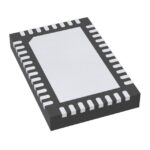 TUSB1104RNQT
The activity of extra discounts on wholesale prices is in full swing…
Please fill in your contact information and we will send you the latest wholesale price list.





