 ChipApex | Global Electronic Components Supplier
SEARCH
Search Product
Search Post
— IC芯片 | 连接器 | 传感器 | 被动器件 —
Search productSearch post
— IC芯片 | 连接器 | 传感器 | 被动器件 —
Consult the customer manager about the wholesale price.
consultation hotline:86-132-6715-2157
email:[email protected]
Contact the product manager for consultation. One-stop consultation is available.
Do you want a lower wholesale price? Please send us your inquiry and we will reply immediately.
The TUSB211AIRWBR is a USB 2.0 high-speed signal conditioner designed to compensate for AC and DC transmission channel losses. It supports data rates up to 480 Mbps while remaining transparent to low-speed and full-speed signals. The device operates on a supply voltage ranging from 2.3 V to 6.5 V, with a typical active current of 22 mA. It features four selectable equalization levels configured via an external pull-down resistor on the EQ pin. The component is housed in a 12-pin X2QFN package measuring 1.6 mm by 1.6 mm and functions within an operating temperature range of -40°C to +85°C.
Verify the specific ordering suffix against the manufacturer's official documentation to confirm the exact temperature grade and packaging configuration. Ensure that the selected variant matches the thermal requirements of the target application environment. Cross-reference the part number with the latest orderable addendum to validate production status and availability before finalizing procurement plans.
Select this component when system design requires compensation for high-loss PCB traces or long cable runs exceeding five meters. Evaluate the required equalization level based on the specific channel loss profile and pre-channel cable length. Consider daisy-chaining multiple units if the application demands extended reach or significant signal restoration beyond the capability of a single device.
This part belongs to the TUSB211A family of USB 2.0 high-speed signal conditioners manufactured by Texas Instruments. It serves as a third-generation solution for restoring signal quality in USB channels. The device is compatible with USB On-The-Go and Battery Charging protocols, providing a scalable approach to maintaining compliance with USB 2.0 electrical specifications.
The TUSB211AIRWBR is pin-compatible with the TUSB211, TUSB212, TUSB214, TUSB216, and TUSB217A series components. Verify that the replacement part meets the specific operating temperature range and voltage requirements of the existing design before substitution.
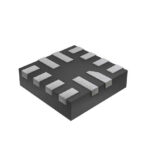 TUSB211AIRWBR
The activity of extra discounts on wholesale prices is in full swing…
Please fill in your contact information and we will send you the latest wholesale price list.





