 ChipApex | Global Electronic Components Supplier
SEARCH
Search Product
Search Post
— IC芯片 | 连接器 | 传感器 | 被动器件 —
Search productSearch post
— IC芯片 | 连接器 | 传感器 | 被动器件 —
Consult the customer manager about the wholesale price.
consultation hotline:86-132-6715-2157
email:[email protected]
Contact the product manager for consultation. One-stop consultation is available.
Do you want a lower wholesale price? Please send us your inquiry and we will reply immediately.
The TUSB217ARWBTQ1 is an automotive-grade USB 2.0 high-speed signal conditioner designed to compensate for transmission channel losses. It utilizes patented edge boosting and DC boosting functions to accelerate signal transitions and improve static levels, while pre-equalization mitigates intersymbol interference in long cable applications. The device supports Low Speed (LS), Full Speed (FS), and High Speed (HS) modes with a maximum data rate of 480 Mbps. It operates within a supply voltage range of 2.3 V to 6.5 V and functions reliably across an extended temperature range from -40°C to +105°C. Packaged in a compact 12-X2QFN (1.6x1.6 mm) format, it integrates BC 1.2 charging controllers.
Verify the specific suffix 'RWBT' against the manufacturer's official datasheet to confirm package dimensions and tape-and-reel specifications. Ensure the component meets AEC-Q100 automotive qualification requirements if deployed in vehicle environments. Cross-reference the RoHS status and moisture sensitivity level prior to assembly planning.
Select this component when system design requires compensation for high-loss channels exceeding standard USB 2.0 limits. It is suitable for applications needing integrated BC 1.2 charging functionality without additional discrete components. Consider daisy-chaining multiple units for distances beyond 5 meters. Verify that the 12-X2QFN footprint aligns with PCB layout constraints.
This part belongs to the TUSB217A series of USB 2.0 signal conditioners manufactured by Texas Instruments. It serves as an automotive-qualified variant within the family, offering signal integrity improvements for high-speed data transmission. The series includes various packages and grades, with this model specifically tailored for robust performance in electrically noisy or lossy environments.
The TUSB217ARWBRQ1 is a pin-compatible alternative within the same series. Verify if the non-automotive grade or different packaging option meets project requirements. No other direct substitutes are confirmed in public documentation.
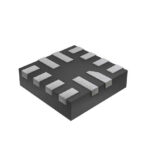 TUSB217ARWBTQ1
The activity of extra discounts on wholesale prices is in full swing…
Please fill in your contact information and we will send you the latest wholesale price list.





