 ChipApex | Global Electronic Components Supplier
SEARCH
Search Product
Search Post
— IC芯片 | 连接器 | 传感器 | 被动器件 —
Search productSearch post
— IC芯片 | 连接器 | 传感器 | 被动器件 —
Consult the customer manager about the wholesale price.
consultation hotline:86-132-6715-2157
email:[email protected]
Contact the product manager for consultation. One-stop consultation is available.
Do you want a lower wholesale price? Please send us your inquiry and we will reply immediately.
The TUSB2E22RZAT is a dual eUSB2 to USB 2.0 repeater manufactured by Texas Instruments, designed for implementing USB 2.0 compliance ports on processors using lower voltage processes. It supports Low Speed (LS), Full Speed (FS), and High Speed (HS) signaling across two independent channels. The device operates with a VDD3V3 supply ranging from 3.0 V to 3.6 V and a VDD1V8 analog supply between 1.62 V and 1.98 V. It functions within an operating temperature range of -20°C to +85°C. The component is housed in a 20-pin VQFN package measuring 3.5 mm x 3.5 mm.
Verify the specific ordering suffix 'RZAT' against the manufacturer's current orderable addendum to confirm tape-and-reel packaging quantities and availability status. Ensure the selected variant matches the required thermal performance metrics for the intended enclosure design. Cross-reference the datasheet revision history to validate that all electrical characteristics align with the production batch specifications.
Select this component when integrating eUSB2 interfaces into standard USB 2.0 connectors requiring signal regeneration. The RZA package offers a compact footprint suitable for space-constrained designs compared to larger BGA options. Evaluate the internal crossbar mux configuration requirements during the schematic phase to determine if hardware pin strapping meets the system topology needs without additional logic control.
This part belongs to the TUSB2E22 family of USB interface integrated circuits. It serves as a bridge between embedded USB implementations found in modern System-on-Chips and external universal serial bus peripherals. The series addresses the need for signal conditioning and protocol translation in mobile and industrial computing platforms where power efficiency and signal integrity are critical constraints.
The TUSB2E22YCGT is a functional equivalent within the same family but utilizes a 25-pin DSBGA package instead of the VQFN form factor. Designers must account for significant differences in physical dimensions, pinout assignments, and thermal dissipation characteristics when substituting these variants. Verify that the PCB layout can accommodate the alternative package geometry without modifying existing mechanical constraints.
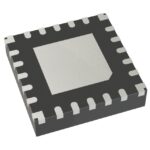 TUSB2E22RZAT
The activity of extra discounts on wholesale prices is in full swing…
Please fill in your contact information and we will send you the latest wholesale price list.





