 ChipApex | Global Electronic Components Supplier
SEARCH
Search Product
Search Post
— IC芯片 | 连接器 | 传感器 | 被动器件 —
Search productSearch post
— IC芯片 | 连接器 | 传感器 | 被动器件 —
Consult the customer manager about the wholesale price.
consultation hotline:86-132-6715-2157
email:[email protected]
Contact the product manager for consultation. One-stop consultation is available.
Do you want a lower wholesale price? Please send us your inquiry and we will reply immediately.
The TUSB3200ACPAHRG4 is a USB streaming controller manufactured by Texas Instruments, belonging to the TUSB series. It integrates an 8052 core processor with 4kB of ROM and 8.25K x 8 bytes of RAM. Designed for surface-mount installation, this component operates within a voltage range of 3V to 3.6V and supports I2C and USB interfaces. The device is housed in a 52-TQFP package (10x10 mm) and functions reliably across an operating temperature range of 0°C to 70°C.
This specific part number is officially listed as obsolete or discontinued by the manufacturer. Verification of current availability requires checking authorized distributors for remaining stock or legacy inventory. Engineering teams should review the Product Change Notification (PCN) dated April 9, 2015, regarding multiple devices in this family to assess long-term supply constraints and lifecycle status before finalizing design implementations.
Designers requiring this component must verify compatibility with the 52-TQFP footprint and ensure the system environment remains within the 0°C to 70°C commercial temperature range. The 3V to 3.6V supply requirement dictates specific power rail configurations. Due to the discontinued status, alternative solutions with similar 8052-based USB controller capabilities and compatible pinouts should be evaluated for new production designs.
The TUSB3200ACPAHRG4 is a variant of the TUSB3200A series, distinguished by its RoHS-compliant suffix (G4). It shares the same functional specifications as the TUSB3200ACPAH but adheres to stricter environmental standards. This component serves as a specialized controller for managing USB data streams within embedded applications, leveraging the internal 8052 architecture for custom firmware execution.
Publicly confirmed substitute part numbers are not available in the provided documentation. Given the discontinued status, engineers must identify cross-reference components based on pin compatibility, electrical parameters, and software architecture rather than direct model substitution.
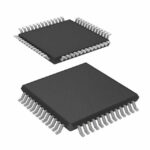 TUSB3200ACPAHRG4
The activity of extra discounts on wholesale prices is in full swing…
Please fill in your contact information and we will send you the latest wholesale price list.





