 ChipApex | Global Electronic Components Supplier
SEARCH
Search Product
Search Post
— IC芯片 | 连接器 | 传感器 | 被动器件 —
Search productSearch post
— IC芯片 | 连接器 | 传感器 | 被动器件 —
Consult the customer manager about the wholesale price.
consultation hotline:86-132-6715-2157
email:[email protected]
Contact the product manager for consultation. One-stop consultation is available.
Do you want a lower wholesale price? Please send us your inquiry and we will reply immediately.
The TUSB3410RHBT is a USB-to-serial bridge controller manufactured by Texas Instruments, housed in a VQFN-32 surface-mount package. It complies with the USB 2.0 Full Speed specification, supporting data rates up to 12 Mb/s. The device operates on a single 3.3 V power supply within a range of 3 V to 3.6 V, drawing approximately 15 mA during operation. It integrates an 8052 microcontroller core for custom firmware execution and supports baud rates from 50 Baud to 921.6 kBaud. The component functions as a serial port controller, facilitating communication between USB hosts and UART devices.
Verify the specific suffix RHBT corresponds to the VQFN-32 package and reel packaging configuration. Confirm that the EEPROM programming tool TUSB3410UARTPDK is used for flashing, as it adds necessary headers for VID/PID and checksums distinct from raw binary files. Ensure compatibility with the required 12 MHz crystal oscillator for the USB controller clock domain.
Select this component when a USB 2.0 Full Speed interface with embedded processing capability is required. It is suitable for designs needing hardware flow control to prevent data loss at baud rates exceeding 115200. Consider the VQFN-32 footprint constraints and the need for separate 12 MHz and system crystals if interfacing with external MCUs like the MSP430 series.
The TUSB3410RHBT belongs to the TUSB3410 family of USB interface ICs. It serves as a bridge between USB protocols and serial interfaces, often paired with development kits such as the TUSB3410UARTPDK for firmware customization. The device enables legacy serial devices to connect to modern USB ports while allowing vendor-specific modifications through its internal microcontroller.
Publicly confirmed substitute part numbers are not available in the provided documentation. Verify pinout and electrical specifications against alternative USB-to-serial controllers before substitution.
The EEPROM contains header data added by the TUSBx10 EEPROM programmer, including device string descriptors, VID/PID, and checksums, which are not present in the raw compiled firmware binary.
Hardware flow control (RTS/CTS) should be enabled when operating at baud rates above 115200 to effectively avoid data loss.
The TUSB3410 typically requires an independent 12 MHz crystal oscillator, separate from the main microcontroller's clock source, to ensure stable USB communication.
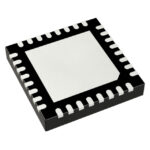 TUSB3410RHBT
The activity of extra discounts on wholesale prices is in full swing…
Please fill in your contact information and we will send you the latest wholesale price list.





