 ChipApex | Global Electronic Components Supplier
SEARCH
Search Product
Search Post
— IC芯片 | 连接器 | 传感器 | 被动器件 —
Search productSearch post
— IC芯片 | 连接器 | 传感器 | 被动器件 —
Consult the customer manager about the wholesale price.
consultation hotline:86-132-6715-2157
email:[email protected]
Contact the product manager for consultation. One-stop consultation is available.
Do you want a lower wholesale price? Please send us your inquiry and we will reply immediately.
The TUSB501DRFR is a single-channel USB 3.0 redriver manufactured by Texas Instruments, designed to extend signal reach in high-speed serial links. It operates within a supply voltage range of 3V to 3.6V and draws a typical supply current of 43.8mA. The device supports data rates up to 5Gbps with an input capacitance of 1.25 pF and a propagation delay of 290ps. It features integrated input equalization and output de-emphasis for signal integrity optimization. The component is housed in an 8-WSON (2x2) package with exposed pad, suitable for surface-mount installation across an operating temperature range of -40°C to 85°C.
Verify the specific ordering suffix DRFR confirms the tape-and-reel packaging format required for automated assembly processes. Confirm that the manufacturer part number matches the exact pinout and electrical specifications needed for the target design. Check for any recent product change notices regarding material or assembly location updates.
Select this component when a single-channel solution is sufficient for extending USB 3.0 signals without requiring multiple lanes. Ensure the system power budget accommodates the 43.8mA supply current requirement. Verify that the 8-WSON package dimensions fit within the available board space constraints compared to larger QFN alternatives.
This device belongs to the TUSB501 family of USB 3.0 redrivers from Texas Instruments. It serves as a cost-effective alternative to more complex multi-lane repeaters for applications requiring only one SuperSpeed pair. The DRFR suffix specifically denotes the reel-based packaging variant intended for high-volume manufacturing environments.
Publicly confirmed substitute part numbers include TUSB501TDRFRQ1. Verify compatibility regarding automotive qualification status and ensure pin-to-pin equivalence before substitution.
The device supports data rates up to 5Gbps, which corresponds to the USB 3.0 SuperSpeed specification.
Yes, the device is compatible with USB Type-C interfaces and can be used in Type-C based designs to extend SuperSpeed signals.
It utilizes input equalization and output de-emphasis to compensate for channel loss, thereby restoring signal integrity at the receiver end.
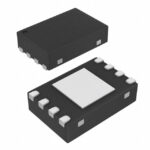 TUSB501DRFR
The activity of extra discounts on wholesale prices is in full swing…
Please fill in your contact information and we will send you the latest wholesale price list.





