 ChipApex | Global Electronic Components Supplier
SEARCH
Search Product
Search Post
— IC芯片 | 连接器 | 传感器 | 被动器件 —
Search productSearch post
— IC芯片 | 连接器 | 传感器 | 被动器件 —
Consult the customer manager about the wholesale price.
consultation hotline:86-132-6715-2157
email:[email protected]
Contact the product manager for consultation. One-stop consultation is available.
Do you want a lower wholesale price? Please send us your inquiry and we will reply immediately.
The TUSB521RGFTQ1 is an automotive-grade USB Type-C linear redriver manufactured by Texas Instruments. It supports SuperSpeed data rates up to 5 Gb/s and features a 2:1 multiplexer configuration for signal routing. The device operates within a supply voltage range of 3 V to 3.6 V and functions reliably across an extended temperature range from -40°C to +105°C. Packaged in a compact VQFN-40 format, it integrates I2C interface capabilities for configuration control. This component is designed to maintain signal integrity in high-speed USB applications requiring robust performance under automotive environmental conditions.
Verify the specific suffix RGFTQ1 against official datasheets to confirm package type and tape-and-reel specifications. Ensure compatibility with existing PCB footprints and thermal requirements before procurement. Cross-reference part numbers with authorized distributors to avoid counterfeit components. Confirm that the automotive grade designation matches project safety and reliability standards.
Select this component when designing USB 3.0 interfaces requiring signal regeneration over long traces or through connectors. The integrated multiplexer simplifies design by reducing external switch requirements. Verify that the operating voltage and temperature ranges align with the target system environment. Consider the VQFN-40 package size constraints during layout planning.
This part belongs to the TUSB521-Q1 series of USB Type-C linear redrivers. It shares functional similarities with other members of the family but differs in packaging and specific ordering suffixes. The series is engineered for high-speed signal integrity in demanding environments. Understanding the broader family helps in identifying compatible alternatives or upgrades within the same product line.
Public confirmed substitute part numbers are not available in the provided documentation. Evaluate pin-to-pin compatible devices only after verifying electrical parameter equivalence. Consult manufacturer guidelines for any recommended cross-references.
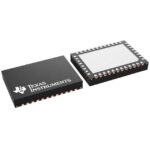 TUSB521RGFTQ1
The activity of extra discounts on wholesale prices is in full swing…
Please fill in your contact information and we will send you the latest wholesale price list.





