 ChipApex | Global Electronic Components Supplier
SEARCH
Search Product
Search Post
— IC芯片 | 连接器 | 传感器 | 被动器件 —
Search productSearch post
— IC芯片 | 连接器 | 传感器 | 被动器件 —
Consult the customer manager about the wholesale price.
consultation hotline:86-132-6715-2157
email:[email protected]
Contact the product manager for consultation. One-stop consultation is available.
Do you want a lower wholesale price? Please send us your inquiry and we will reply immediately.
The TXO-V86-515-Q is a piezoelectric buzzer from the Floyd Bell Turbo series, designed for extra loud continuous operation. It features an internal audio-oscillator and piezoelectric driver circuit, requiring only a DC input voltage range of 5 to 15V. The unit measures approximately 35.81mm in diameter with a height of roughly 25.4mm (1 inch). It operates at a frequency of 2900 ±250 Hz and delivers a sound pressure level of 103 dB(A) at two feet. The device includes a rotary volume control for attenuation adjustment and utilizes quick connect tabs measuring 0.250 inches for electrical connection.
Verify the specific voltage tolerance requirements against your system's power supply, as this model operates within a 5 to 15V DC range. Confirm that the mounting configuration matches your enclosure design, as panel and PCB mounting options are available. Ensure the quick connect tab dimensions align with your wiring harness connectors. Check for RoHS compliance documentation if environmental regulations apply to your manufacturing process.
Select this component when high acoustic output is required without external driving circuits. The internal drive simplifies schematic design compared to passive buzzers. Consider the physical dimensions and mounting style relative to your chassis constraints. The included volume control offers field adjustability, reducing the need for multiple part numbers for different sensitivity levels. Verify that the operating temperature range meets your environmental conditions.
This part belongs to the Floyd Bell Turbo series, which specializes in high-decibel piezoelectric signaling devices. The series is characterized by robust construction and integrated electronics that simplify integration into various electronic assemblies. Similar models in the lineup may offer different voltage ranges or sound patterns, but share the core turbo technology for maximum audibility in noisy environments.
Direct substitutes include the TXC-V86-515-Q and TXT-V86-515-Q, which share similar form factors and internal drive capabilities. Verify that any replacement maintains the same voltage input range and mounting hole spacing. Ensure the replacement unit also provides the necessary decibel output for your specific application requirements.
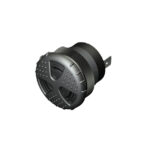 TXO-V86-515-Q
The activity of extra discounts on wholesale prices is in full swing…
Please fill in your contact information and we will send you the latest wholesale price list.





