 ChipApex | Global Electronic Components Supplier
SEARCH
Search Product
Search Post
— IC芯片 | 连接器 | 传感器 | 被动器件 —
Search productSearch post
— IC芯片 | 连接器 | 传感器 | 被动器件 —
Consult the customer manager about the wholesale price.
consultation hotline:86-132-6715-2157
email:[email protected]
Contact the product manager for consultation. One-stop consultation is available.
Do you want a lower wholesale price? Please send us your inquiry and we will reply immediately.
The TXS0104EQWBQARQ1 is an automotive-grade, 4-bit bidirectional voltage-level translator designed for open-drain and push-pull applications. It operates with a VCCA range of 1.65 V to 3.6 V and a VCCB range of 2.3 V to 5.5 V. The device supports maximum data rates of 24 Mbps for push-pull driving and 2 Mbps for open-drain driving. It features integrated 10-kΩ pullup resistors on all channels, eliminating the need for external components. The unit utilizes a WQFN-14 package and functions within an ambient operating temperature range of -40°C to +125°C.
Verify that the specific ordering suffix matches the required package type, as the TXS0104E-Q1 family includes multiple physical form factors such as TSSOP, WQFN, and UQFN. Confirm that the application environment strictly adheres to the recommended operating conditions regarding supply voltage limits and thermal constraints. Ensure compatibility with the target logic families before finalizing procurement specifications.
Select this component when interfacing between incompatible logic chips requiring voltage mismatch bridging without host intervention. It is suitable for designs needing mixed open-drain and push-pull outputs on the same bus. Consider the specific package dimensions and thermal resistance characteristics relative to the PCB layout requirements. Verify that the system power sequencing does not violate the absolute maximum ratings during startup.
This part belongs to the Texas Instruments TXS0104E-Q1 family of automotive voltage translators. It is specifically engineered for robust operation in harsh automotive environments, meeting AEC-Q100 qualification standards. The device serves as a bridge for communication protocols where voltage levels differ between the main processor and connected peripherals.
TXS0104EQPWRQ1
No, the device is a directionless translator that automatically detects the direction of data flow between the A and B ports without requiring a control signal.
The OE (Output Enable) pin controls the state of the outputs. Pulling the OE pin low places all outputs into a high-impedance state.
Yes, each channel can be mixed and matched with different output types and mixed data flows (transmit or receive) without host intervention.
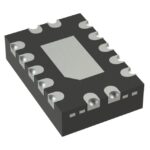 TXS0104EQWBQARQ1
The activity of extra discounts on wholesale prices is in full swing…
Please fill in your contact information and we will send you the latest wholesale price list.






