 ChipApex | Global Electronic Components Supplier
SEARCH
Search Product
Search Post
— IC芯片 | 连接器 | 传感器 | 被动器件 —
Search productSearch post
— IC芯片 | 连接器 | 传感器 | 被动器件 —
Consult the customer manager about the wholesale price.
consultation hotline:86-132-6715-2157
email:[email protected]
Contact the product manager for consultation. One-stop consultation is available.
Do you want a lower wholesale price? Please send us your inquiry and we will reply immediately.
The TXU0104QWBQARQ1 is an automotive-grade, 4-bit fixed-direction voltage-level translator with Schmitt-trigger inputs and 3-state outputs. It supports dual-rail operation from 1.1 V to 5.5 V on both ports. The device achieves data rates up to 200 Mbps when translating between 3.3 V and 5.0 V supplies. It features high drive strength of up to 12 mA at 5 V and low power consumption, with maximum supply currents of 6 µA across the full operating temperature range of -40°C to +125°C.
Verify that the specific WBQA package variant matches the required footprint and thermal pad configuration for the target PCB layout. Confirm AEC-Q100 qualification status is required for the specific automotive application environment. Ensure supply voltage rails on both ports remain within the 1.1 V to 5.5 V operational limits to maintain specified performance and reliability standards.
Select this component when a fixed unidirectional translation path is sufficient, unlike bidirectional alternatives. The inclusion of Schmitt triggers makes it suitable for environments with significant signal noise or slow rise times. Verify that the required data rate does not exceed the limits defined by the specific voltage differential between the A and B ports.
This device belongs to the Texas Instruments TXU0x04-Q1 family of automotive voltage translators. It shares pinout compatibility with the TXB0104-Q1 but offers higher drive strength and dedicated unidirectional functionality. The WBQA suffix indicates the wettable flank QFN package, which facilitates automated optical inspection of solder joints for enhanced manufacturing quality control.
TXB0104QWBQARQ1
The Output Enable (OE) pin can be referenced to either VCCA or VCCB logic levels. Pulling it low disables all outputs to a high-impedance state, while pulling it high enables data transmission.
If either VCCA or VCCB input drops below 100 mV or is disconnected, the VCC isolation feature automatically disables all outputs, preventing unintended current flow during partial-power-down scenarios.
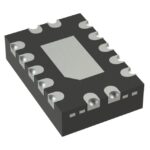 TXU0104QWBQARQ1
The activity of extra discounts on wholesale prices is in full swing…
Please fill in your contact information and we will send you the latest wholesale price list.





