 ChipApex | Global Electronic Components Supplier
SEARCH
Search Product
Search Post
— IC芯片 | 连接器 | 传感器 | 被动器件 —
Search productSearch post
— IC芯片 | 连接器 | 传感器 | 被动器件 —
Consult the customer manager about the wholesale price.
consultation hotline:86-132-6715-2157
email:[email protected]
Contact the product manager for consultation. One-stop consultation is available.
Do you want a lower wholesale price? Please send us your inquiry and we will reply immediately.
The TXU0202DCUR is a dual-bit, fixed-direction voltage-level translator manufactured by Texas Instruments. It operates with independent VCCA and VCCB supplies ranging from 1.08 V to 5.5 V. The device supports data rates up to 200 Mbps at 3.3 V to 5.0 V logic levels. It features Schmitt-trigger inputs for noise immunity and provides 3-state outputs. The OE pin controls output enablement relative to either supply rail. It is housed in an 8-pin VSSOP package.
Verify the specific DCUR suffix corresponds to the VSSOP-8 package configuration required for your PCB layout. Confirm that the fixed-direction functionality aligns with your system architecture, as this component does not support bidirectional automatic direction detection. Ensure power supply sequencing meets the recommended operating conditions to maintain proper logic state integrity.
Select this component when a fixed unidirectional translation path is sufficient for the application. It is suitable for systems requiring high drive strength and robust noise rejection via Schmitt triggers. Consider the TXS0102 if bidirectional automatic direction sensing is necessary instead of manual control via the OE pin. Verify thermal requirements against the junction-to-ambient resistance values provided in the datasheet.
This device belongs to the TXU0x02 family of 2-bit unidirectional voltage-level translators. It shares pinout compatibility with the TXB family, allowing for drop-in replacements in existing designs where higher drive strength is needed. The TXU0102 variant offers a similar function but is optimized for common-direction GPIO translation applications.
TXB0102: Pin-compatible alternative; however, it lacks the high drive strength and specific Ioff characteristics of the TXU0202.
The Output Enable (OE) pin can be referenced to either the VCCA or VCCB logic level. Pulling it low disables all outputs to a high-impedance state, while pulling it high enables them.
If either VCCA or VCCB is disconnected or falls below 100 mV, the Ioff-float feature activates, disabling all outputs and placing them in a high-impedance state to support partial-power-down mode.
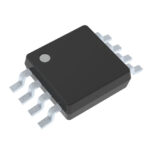 TXU0202DCUR
The activity of extra discounts on wholesale prices is in full swing…
Please fill in your contact information and we will send you the latest wholesale price list.





