 ChipApex | Global Electronic Components Supplier
SEARCH
Search Product
Search Post
— IC芯片 | 连接器 | 传感器 | 被动器件 —
Search productSearch post
— IC芯片 | 连接器 | 传感器 | 被动器件 —
Consult the customer manager about the wholesale price.
consultation hotline:86-132-6715-2157
email:[email protected]
Contact the product manager for consultation. One-stop consultation is available.
Do you want a lower wholesale price? Please send us your inquiry and we will reply immediately.
The TY-304P is an audio and signal transformer manufactured by Triad Magnetics, designed for PCB mounting applications. It features a single channel with dual primary and dual secondary windings configured for 600 ohm center-tapped to 600 ohm center-tapped impedance matching. The device operates within a frequency range of 200 Hz to 15 kHz and supports a maximum DC current of 15 mA in the primary winding. Rated for 100 mW power handling, it provides 1.5 kV insulation voltage and functions reliably between 0°C and +105°C.
Verify that the specific procurement order matches the exact model designation TY-304P to ensure correct impedance configuration. Confirm that the application environment remains within the specified operating temperature range of 0°C to +105°C. Ensure PCB layout accommodates the radial pin spacing and physical dimensions provided in the official datasheet. Check for compliance requirements relevant to the end-use industry, such as FCC regulations for telecommunications equipment.
Select this component when a balanced 600 ohm to 600 ohm audio interface is required with integrated DC bias capability. The radial package suits designs needing robust mechanical anchoring on standard PCBs. Consider the 1.5 kV isolation if galvanic separation between signal stages is necessary. Evaluate the 200 Hz to 15 kHz bandwidth against the specific frequency response needs of the audio or data signal path to ensure minimal attenuation within the operational spectrum.
The TY-304P belongs to Triad Magnetics' audio and signal transformer series, specifically engineered for communication and audio fidelity applications. This model complements other components in the TY series by offering standardized impedance matching for professional audio infrastructure. Its design focuses on maintaining signal integrity in balanced transmission lines while allowing for direct current injection, making it suitable for active electronic circuits in both consumer and industrial audio environments.
Public confirmed substitute part numbers are not available in the provided documentation. Verify compatibility with alternative models by cross-referencing impedance ratios, physical footprint, and electrical ratings with the original specifications.
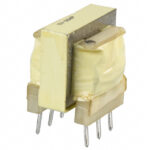 TY-304P
The activity of extra discounts on wholesale prices is in full swing…
Please fill in your contact information and we will send you the latest wholesale price list.







