 ChipApex | Global Electronic Components Supplier
SEARCH
Search Product
Search Post
— IC芯片 | 连接器 | 传感器 | 被动器件 —
Search productSearch post
— IC芯片 | 连接器 | 传感器 | 被动器件 —
Consult the customer manager about the wholesale price.
consultation hotline:86-132-6715-2157
email:[email protected]
Contact the product manager for consultation. One-stop consultation is available.
Do you want a lower wholesale price? Please send us your inquiry and we will reply immediately.
The USound UA-C0601-2T is a piezoMEMS microspeaker manufactured by USound GmbH. It utilizes silicon-based MEMS technology to deliver high-performance audio in an ultra-compact form factor. The component features a sealed, magnet-free design suitable for reflow soldering processes. Key technical attributes include wideband audio reproduction and ultra-low power consumption. These characteristics make it ideal for integration into space-constrained devices such as true wireless stereo (TWS) earbuds, wearable electronics, AR/VR headsets, and medical devices.
Verify the specific revision suffix against the official USound datasheet to ensure compatibility with your PCB footprint and thermal profile. Confirm that the magnet-free specification aligns with MRI or sensitive magnetic environment requirements. Request the latest mechanical drawing for precise mounting tolerances. Validate electrical impedance parameters against your amplifier output stage. Ensure supply chain sources are authorized distributors to guarantee component authenticity.
Select this component when extreme size reduction is critical compared to traditional dynamic drivers. Consider its suitability for applications requiring immunity to external magnetic fields due to the absence of permanent magnets. Evaluate its low power profile for battery-operated wearables where energy efficiency extends operational time. Assess integration complexity regarding the need for specialized acoustic chambers versus standard enclosure designs.
USound GmbH specializes in MEMS audio solutions, leveraging semiconductor manufacturing techniques to produce silicon speakers. This approach allows for consistent mass production and high precision. The UA-C0601-2T represents their piezoMEMS technology line, designed to replace conventional voice-coil speakers in modern consumer electronics. The company holds extensive patents covering these miniature audio transducers.
Direct cross-references require matching the exact MEMS die size and acoustic port configuration. Verify if alternative suppliers offer comparable magnet-free architectures. Check for equivalent sealing methods to maintain IP ratings. Ensure the replacement maintains similar total harmonic distortion levels at target frequencies.
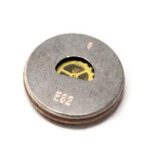 UA-C0601-2T
The activity of extra discounts on wholesale prices is in full swing…
Please fill in your contact information and we will send you the latest wholesale price list.





