 ChipApex | Global Electronic Components Supplier
SEARCH
Search Product
Search Post
— IC芯片 | 连接器 | 传感器 | 被动器件 —
Search productSearch post
— IC芯片 | 连接器 | 传感器 | 被动器件 —
Consult the customer manager about the wholesale price.
consultation hotline:86-132-6715-2157
email:[email protected]
Contact the product manager for consultation. One-stop consultation is available.
Do you want a lower wholesale price? Please send us your inquiry and we will reply immediately.
The UC2855ADWTR is a high-performance power factor correction controller manufactured by Texas Instruments. It operates within a supply voltage range of 10 V to 20 V and supports switching frequencies up to 500 kHz. The device features an integrated soft-start circuit, adjustable current limit threshold, and zero-power detection for efficient operation. Designed for surface-mount applications, it is housed in a 20-pin SOIC package. The component functions as a pre-regulator with advanced control characteristics including frequency control, ramp compensation, and current limiting to ensure stable power factor correction.
Verify the specific suffix 'DWTR' corresponds to the tape-and-reel packaging format required for automated assembly processes. Confirm that the operating temperature range aligns with the intended environmental conditions, as industrial variants may differ from commercial equivalents. Ensure compatibility with the selected PCB footprint for the 20-SOIC package before finalizing procurement orders.
Select this component when designing systems requiring active power factor correction with integrated soft-start and zero-power detection features. Consider the 500 kHz maximum switching frequency for balancing component size and efficiency. Evaluate the 20-V maximum supply voltage against the system's auxiliary power requirements. Compare against other UC285x series devices if different pinouts or specific topology constraints are necessary for the application.
The UC2855ADWTR belongs to the UC2855 family of power factor correction controllers from Texas Instruments. This series is designed to meet regulatory standards for harmonic distortion in AC power inputs. The ADWTR designation indicates the automotive-grade or extended temperature variant packaged in reels, distinguishing it from tube-packaged versions like the UC2855BDW.
Direct substitutes include the UC2855BDW for tube packaging or the UC2854 series for similar functionality with different switching frequency limits. Verify pin-to-pin compatibility and electrical parameter overlaps before swapping components in existing designs.
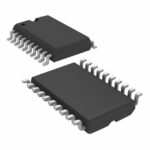 UC2855ADWTR
The activity of extra discounts on wholesale prices is in full swing…
Please fill in your contact information and we will send you the latest wholesale price list.





