 ChipApex | Global Electronic Components Supplier
SEARCH
Search Product
Search Post
— IC芯片 | 连接器 | 传感器 | 被动器件 —
Search productSearch post
— IC芯片 | 连接器 | 传感器 | 被动器件 —
Consult the customer manager about the wholesale price.
consultation hotline:86-132-6715-2157
email:[email protected]
Contact the product manager for consultation. One-stop consultation is available.
Do you want a lower wholesale price? Please send us your inquiry and we will reply immediately.
The UC3835N is a linear regulator controller designed for high-current, low-dropout applications. It operates within an input supply voltage range of 5.2V to 35V and provides a fixed 5V output reference at the VOUT Sense pin. The device features a 250mA internal driver capable of sourcing or sinking current, with an external pass element enabling peak output currents up to 2.5A. It incorporates under-voltage lockout (UVLO) with a threshold between 3.9V and 4.9V, thermal shutdown protection at 165°C, and reverse voltage protection. The component utilizes foldback current limiting to reduce output current during short circuits.
Verify the UC3835N status as Not Recommended for New Designs (NRND). Confirm package type PDIP-8 availability and lead finish specifications. Ensure design updates consider obsolescence timelines. Check RoHS compliance details in the latest datasheet. Validate operating temperature range requirements against catalog specifications.
Select the UC3835N for fixed 5V linear regulator designs requiring robust protection features. Consider the UC3836 if adjustable output voltage from 2.5V to 35V is needed. Evaluate external pass transistor capabilities to handle the required load current and power dissipation. Verify that the system input voltage remains within the specified 5.2V to 35V range for proper UVLO and regulation performance.
The UC3835 belongs to the UC1835/UC2835/UC3835 family of linear regulator controllers manufactured by Texas Instruments. These devices are optimized for low-cost, high-efficiency linear regulator designs using external pass elements. The UC3835 specifically denotes the commercial grade version with an operating temperature range of 0°C to 70°C, distinct from the extended temperature UC2835 and military grade UC1835 variants.
The UC3836 serves as the primary functional substitute when adjustable output voltage is acceptable instead of the fixed 5V configuration. Other members of the UC1835/UC2835/UC3835 family may be considered based on specific temperature range requirements.
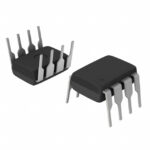 UC3835N
The activity of extra discounts on wholesale prices is in full swing…
Please fill in your contact information and we will send you the latest wholesale price list.





