 ChipApex | Global Electronic Components Supplier
SEARCH
Search Product
Search Post
— IC芯片 | 连接器 | 传感器 | 被动器件 —
Search productSearch post
— IC芯片 | 连接器 | 传感器 | 被动器件 —
Consult the customer manager about the wholesale price.
consultation hotline:86-132-6715-2157
email:[email protected]
Contact the product manager for consultation. One-stop consultation is available.
Do you want a lower wholesale price? Please send us your inquiry and we will reply immediately.
The UC3853N is a high power factor preregulator integrated circuit manufactured by Texas Instruments. It operates in continuous conduction mode (CCM) using average current mode control to optimize input current waveform and minimize harmonic distortion. The device supports a practical operating frequency range up to 0.115 MHz, with typical switching frequencies between 56 kHz and 94 kHz. It functions within an operating supply voltage range of 12 V to 40 V and draws a startup current of 0.25 mA. The component is housed in an 8-pin PDIP package and is rated for operation at temperatures ranging from 0°C to 70°C.
Verify that the specific part number suffix corresponds to the desired package type, such as PDIP or SOIC, as functional characteristics remain consistent across packaging variants. Confirm the manufacturing origin and RoHS compliance status through official datasheets or authorized distributor documentation before integration into production designs.
Select this component when designing single-phase PFC stages requiring average current mode control. Ensure the application demands a switching frequency below 0.115 MHz and operates within the specified 12 V to 40 V supply range. Consider thermal management requirements for the chosen package style during PCB layout planning.
This device belongs to the UC385x series of power factor correction controllers developed by Texas Instruments. It serves as a specialized solution for improving efficiency and reducing line harmonics in power conversion systems. The UC3853N represents a discrete implementation of these control algorithms within a standard industrial package format.
Publicly confirmed substitute part numbers include UC2853DTRG4, UC3853DTRG4, and UC2853. Verify pin compatibility and electrical specifications against original design requirements before substitution.
The UC3853N utilizes average current mode control to manage the power factor correction process.
No, the UC3853N is designed specifically for single-phase power factor correction applications.
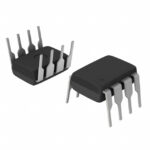 UC3853N
The activity of extra discounts on wholesale prices is in full swing…
Please fill in your contact information and we will send you the latest wholesale price list.





