 ChipApex | Global Electronic Components Supplier
SEARCH
Search Product
Search Post
— IC芯片 | 连接器 | 传感器 | 被动器件 —
Search productSearch post
— IC芯片 | 连接器 | 传感器 | 被动器件 —
Consult the customer manager about the wholesale price.
consultation hotline:86-132-6715-2157
email:[email protected]
Contact the product manager for consultation. One-stop consultation is available.
Do you want a lower wholesale price? Please send us your inquiry and we will reply immediately.
The UCC20225NPLT is a dual-channel isolated gate driver from Texas Instruments, housed in a space-saving 13-VLGA (5mm x 5mm) package. It features a single PWM input and provides 4A source and 6A sink peak currents. The device utilizes capacitive coupling technology with a 2.5kVRMS isolation barrier and a minimum CMTI of 100V/ns. Internal functional isolation between outputs supports up to 700VDC bus voltages. Key electrical parameters include a typical propagation delay of 19ns, maximum delay matching of 5ns, and rise/fall times of 6ns/7ns respectively. Operating voltage ranges from 3V to 18V for the logic side.
Verify the specific suffix against the manufacturer's current product status, as availability may vary. Confirm that the 13-VLGA package dimensions match your PCB layout requirements. Ensure the 2.5kVRMS isolation rating meets your system's safety certification needs. Check for any recent production change notices or end-of-life announcements regarding this specific part number before finalizing procurement plans.
Select this component when a compact solution is required for driving two switches from a single control signal. The 4A/6A current capability suits medium-power applications, while the 100V/ns CMTI ensures noise immunity in harsh environments. Consider the 13-VLGA package if board space is constrained. Verify that the 8V UVLO threshold aligns with your gate drive voltage levels and that the 700VDC internal isolation is sufficient for your bus voltage.
This device belongs to the UCC20225 family of isolated gate drivers designed for high-performance power conversion. It complements other TI solutions by offering a balance of speed, isolation strength, and physical size. The LGA-13 package allows for efficient thermal dissipation and reduced parasitic inductance compared to larger DIP packages, making it suitable for modern high-density electronics.
The UCC20225QNPLRQ1 is listed as a manufacturer-recommended alternative. Verify pin compatibility and parameter equivalence before substitution.
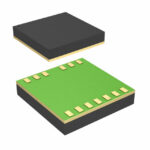 UCC20225NPLT
The activity of extra discounts on wholesale prices is in full swing…
Please fill in your contact information and we will send you the latest wholesale price list.





