 ChipApex | Global Electronic Components Supplier
SEARCH
Search Product
Search Post
— IC芯片 | 连接器 | 传感器 | 被动器件 —
Search productSearch post
— IC芯片 | 连接器 | 传感器 | 被动器件 —
Consult the customer manager about the wholesale price.
consultation hotline:86-132-6715-2157
email:[email protected]
Contact the product manager for consultation. One-stop consultation is available.
Do you want a lower wholesale price? Please send us your inquiry and we will reply immediately.
The UCC21551ADWR is a dual-channel reinforced isolated gate driver from Texas Instruments, housed in a 16-pin SOIC package. It features a peak source current of 4A and a peak sink current of 6A. The device provides 5000Vrms reinforced isolation and operates within a junction temperature range of -40°C to +150°C. Key electrical parameters include a maximum propagation delay of 45ns, with rise and fall times of 8ns each. The output voltage range spans from 13V to 25V, supporting flexible drive requirements for power switches.
Verify the specific suffix 'ADWR' against the manufacturer's latest ordering guide to ensure correct packaging and tape-and-reel specifications. Confirm that the 16-SOIC package variant matches your PCB footprint requirements. Cross-reference the revision history in the official datasheet to validate compatibility with your design's thermal and electrical constraints before finalizing procurement.
Select this component when reinforced isolation ratings are mandatory for safety compliance. The integrated programmable dead-time reduces external component count compared to non-integrated solutions. Ensure the 4A/6A drive strength aligns with the target MOSFET or IGBT gate charge requirements. Consider the wide operating temperature range for harsh industrial environments where standard commercial grade parts may fail.
This part belongs to the UCC21551x family of isolated gate drivers designed for high-performance power conversion. It complements other variants like the UCC21550 and UCC21551-Q1 by offering specific packaging and automotive qualification options. The family shares core architectural features but differs in isolation ratings and certification standards, allowing designers to choose based on application-specific regulatory needs.
Direct substitutes include the UCC21551AQDWKRQ1 for automotive-grade requirements. Verify pinout compatibility with the UCC21550 series if isolation voltage differences are acceptable. Check datasheets for any changes in propagation delay or drive strength when migrating between different package types within the same functional family.
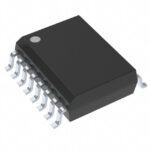 UCC21551ADWR
The activity of extra discounts on wholesale prices is in full swing…
Please fill in your contact information and we will send you the latest wholesale price list.





