 ChipApex | Global Electronic Components Supplier
SEARCH
Search Product
Search Post
— IC芯片 | 连接器 | 传感器 | 被动器件 —
Search productSearch post
— IC芯片 | 连接器 | 传感器 | 被动器件 —
Consult the customer manager about the wholesale price.
consultation hotline:86-132-6715-2157
email:[email protected]
Contact the product manager for consultation. One-stop consultation is available.
Do you want a lower wholesale price? Please send us your inquiry and we will reply immediately.
The UCC24624DT is a high-frequency dual synchronous rectifier gate driver manufactured by Texas Instruments. It features two drivers with two outputs, delivering a peak output current of 4 A. The device operates within a supply voltage range of 4.25 V to 26 V and supports TTL logic inputs. It exhibits a maximum turn-off delay time of 23 ns and consumes 1.1 mA during operation. The component is housed in an SOIC-8 package and functions reliably across a temperature range of -40 °C to +125 °C.
Verify the specific suffix 'DT' corresponds to the SOIC-8 package configuration when sourcing. Confirm that the required operating temperature range aligns with the specified -40 °C to +125 °C limits. Ensure the design accommodates the 4.25 V minimum supply voltage requirement. Check for moisture sensitivity handling procedures as indicated in the datasheet specifications before assembly.
Select this component for designs requiring independent control of two synchronous rectifiers in high-frequency topologies. The 4 A drive strength suits medium-power applications where low gate charge is prioritized over extreme current surge capabilities. Consider the SOIC-8 footprint constraints and thermal dissipation requirements relative to the PCB layout. Validate compatibility with the controller's TTL logic levels to ensure proper signal interfacing without additional level shifting.
This device belongs to the UCC24624 series of synchronous rectifier controllers. It complements other TI gate drivers like the UCC27424D but is specifically optimized for secondary-side rectification rather than primary-side switching. The part integrates features tailored for resonant converters, distinguishing it from general-purpose low-side drivers found in broader power management portfolios.
Public confirmed substitute part numbers are not available in the provided documentation. Verify pinout and electrical parameter compatibility if considering alternative manufacturers or different TI series parts for redesign purposes.
The maximum turn-off delay time is 23 ns.
Yes, the device features TTL logic type inputs for compatibility with standard control signals.
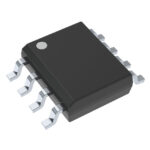 UCC24624DT
The activity of extra discounts on wholesale prices is in full swing…
Please fill in your contact information and we will send you the latest wholesale price list.







