 ChipApex | Global Electronic Components Supplier
SEARCH
Search Product
Search Post
— IC芯片 | 连接器 | 传感器 | 被动器件 —
Search productSearch post
— IC芯片 | 连接器 | 传感器 | 被动器件 —
Consult the customer manager about the wholesale price.
consultation hotline:86-132-6715-2157
email:[email protected]
Contact the product manager for consultation. One-stop consultation is available.
Do you want a lower wholesale price? Please send us your inquiry and we will reply immediately.
The UCC28056DBVT is a six-pin power factor correction controller from Texas Instruments, housed in an SOT-23 package. It operates within a temperature range of -40°C to +125°C and draws a supply current of 46 µA. The device supports a wide VCC range from 8.5V to 34V and features integrated overtemperature protection with second independent output voltage protection.
Verify the specific suffix DBVT corresponds to the SOT-23-6 package configuration during procurement. Confirm that the ordering part number matches the required reel or cut tape specifications for your assembly line. Ensure compatibility with the intended operating temperature range of negative forty degrees Celsius to one hundred twenty-five degrees Celsius before finalizing purchase orders.
Select this component for designs requiring high performance in compact spaces due to its small footprint. It is suitable for applications needing compliance with EuP Lot 6 and CoC Version 5 Level 2 standards. Consider pairing with LLC controllers like the UCC256301 to eliminate auxiliary flyback converters. Evaluate the need for valley synchronization features to optimize efficiency across varying load conditions.
This part belongs to the UCC28056 series of power factor correction controllers designed for high-efficiency AC-DC conversion. It serves as a critical component in modern power supplies aiming to reduce electromagnetic interference and improve overall system efficiency through advanced control algorithms.
Public confirmed substitute part numbers are not available in the provided documentation. Verify pinout and functional compatibility with existing designs if considering alternative PFC controllers from other manufacturers.
It transitions smoothly from transition mode to discontinuous conduction mode and utilizes burst mode with soft entry and exit to maintain high efficiency and meet energy standards without turning off the PFC.
No, the device allows for valley synchronization without requiring a second winding on the boost inductor, simplifying the magnetic design.
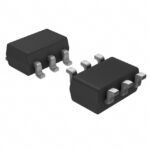 UCC28056DBVT
The activity of extra discounts on wholesale prices is in full swing…
Please fill in your contact information and we will send you the latest wholesale price list.





