 ChipApex | Global Electronic Components Supplier
SEARCH
Search Product
Search Post
— IC芯片 | 连接器 | 传感器 | 被动器件 —
Search productSearch post
— IC芯片 | 连接器 | 传感器 | 被动器件 —
Consult the customer manager about the wholesale price.
consultation hotline:86-132-6715-2157
email:[email protected]
Contact the product manager for consultation. One-stop consultation is available.
Do you want a lower wholesale price? Please send us your inquiry and we will reply immediately.
The UCC28060DR is a natural interleaved dual-phase transition-mode power factor correction (PFC) controller manufactured by Texas Instruments. It operates within a supply voltage range of 14V to 21V and supports switching frequencies up to 500 kHz. The device is housed in a 16-pin SOIC package and functions reliably across an extended temperature range from -40°C to +125°C. Designed for high-efficiency applications, it complies with light-load efficient standards while offering improved design flexibility over traditional single-phase continuous conduction mode solutions.
Verify the specific ordering suffix 'D' corresponds to the SOIC-16 package variant when sourcing. Confirm RoHS compliance status through official manufacturer documentation prior to integration. Ensure the selected component matches the required operating temperature range specifications for your intended environment. Cross-reference the datasheet revision history to validate feature availability and electrical characteristics against your design requirements.
Select this controller for applications demanding dual-phase interleaving without complex digital control loops. It is suitable for designs prioritizing natural phase shifting to minimize input current ripple. Consider this part when transitioning from single-phase CCM topologies to achieve better efficiency at partial loads. Evaluate thermal management needs as dual-phase operation distributes heat across two channels.
This component belongs to the UCC2806x series of PFC controllers from Texas Instruments. It is specifically engineered for transition-mode operation with natural interleaving capabilities. The DR suffix indicates the tape-and-reel packaging format for surface-mount assembly. It serves as a specialized solution for high-performance power factor correction in modern electronic equipment.
The UCC28060D is the tube-packaged equivalent of the UCC28060DR. Designers may substitute based on manufacturing assembly preferences, provided the functional specifications remain identical. Verify that the package footprint and pinout are compatible with the existing PCB layout before swapping between reel and tube variants.
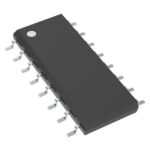 UCC28060DR
The activity of extra discounts on wholesale prices is in full swing…
Please fill in your contact information and we will send you the latest wholesale price list.





