 ChipApex | Global Electronic Components Supplier
SEARCH
Search Product
Search Post
— IC芯片 | 连接器 | 传感器 | 被动器件 —
Search productSearch post
— IC芯片 | 连接器 | 传感器 | 被动器件 —
Consult the customer manager about the wholesale price.
consultation hotline:86-132-6715-2157
email:[email protected]
Contact the product manager for consultation. One-stop consultation is available.
Do you want a lower wholesale price? Please send us your inquiry and we will reply immediately.
The UCC28061QDRQ1 is an automotive-grade, dual-channel Natural Interleaving Transition-Mode Power Factor Correction (PFC) controller manufactured by Texas Instruments. Designed for high-efficiency power supplies ranging from 100W to 800W, it utilizes a sensorless current shaping technique to simplify layout and enhance performance. The device operates within a supply voltage range of 14V to 21V and supports switching frequencies up to 500kHz. It features a 16-pin SOIC package and functions reliably across an extended temperature range of -40°C to +125°C.
Verify that the specific suffix QDRQ1 confirms AEC-Q100 automotive qualification status. Confirm the SOIC-16 package dimensions match your PCB footprint requirements. Ensure the design accounts for the specified operating supply voltage range of 14V to 21V. Validate thermal management strategies for the -40°C to +125°C operating environment. Cross-reference the datasheet revision date to ensure compatibility with latest design guidelines.
Select this component when designing interleaved PFC stages for automotive applications where audible noise immunity and high efficiency are critical. It is suitable for replacing single-phase CCM controllers to reduce EMI filter size and capacitor count. Consider its sensorless architecture if minimizing bill-of-materials complexity is a priority. Evaluate its surge-safe current limiting capabilities against standard inrush protection methods.
This device belongs to the UCC2806x family of Natural Interleaving Transition-Mode PFC controllers. It shares architectural similarities with the UCC28061 but includes specific automotive qualification markings indicated by the 'Q' prefix. The DRQ1 suffix denotes the tape-and-reel packaging format in a narrow SOIC package. It complements other TI PMIC solutions for complete power management systems.
The UCC28061DR serves as the commercial-grade equivalent. Verify pinout compatibility before substitution. Automotive designs must retain the QDRQ1 variant for reliability standards. Check if non-interleaved alternatives meet the specific efficiency targets required by the application.
Unlike traditional designs using master-slave configurations, Natural Interleaving operates both channels as masters synchronized to the same frequency, providing inherent phase matching and faster transient response.
It includes input undervoltage lockout, output overvoltage protection with FailSafe capability, open-loop detection, overload protection, soft-start, phase fault detection, and thermal shutdown.
Yes, it utilizes a sensorless current shaping technique that eliminates the need for external current sensors, thereby reducing component count and simplifying the circuit layout.
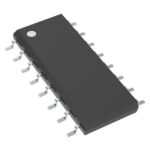 UCC28061QDRQ1
The activity of extra discounts on wholesale prices is in full swing…
Please fill in your contact information and we will send you the latest wholesale price list.





