 ChipApex | Global Electronic Components Supplier
SEARCH
Search Product
Search Post
— IC芯片 | 连接器 | 传感器 | 被动器件 —
Search productSearch post
— IC芯片 | 连接器 | 传感器 | 被动器件 —
Consult the customer manager about the wholesale price.
consultation hotline:86-132-6715-2157
email:[email protected]
Contact the product manager for consultation. One-stop consultation is available.
Do you want a lower wholesale price? Please send us your inquiry and we will reply immediately.
The UCC28070APWR is an interleaving continuous conduction mode (CCM) power factor correction controller manufactured by Texas Instruments. It integrates two pulse width modulation (PWM) controllers operating 180 degrees out of phase to reduce input and output ripple currents. The device supports a programmable switching frequency range from 10 kHz to 300 kHz, enabling operation with IGBT power switches in high-power applications. It features advanced current synthesis for superior efficiency and a highly linear multiplier with internal quantized voltage feed-forward correction. The component operates within a supply voltage range of 11.2 V to 21 V and dissipates up to 800 mW. It is housed in a 20-pin TSSOP package.
Verify the specific suffix 'APWR' against the manufacturer's latest documentation to confirm the extended frequency range capability down to 10 kHz, as this distinguishes it from standard variants. Ensure the procurement channel provides original manufacturer packaging to maintain component integrity. Cross-reference the RoHS compliance status and lead times directly with authorized distributors prior to ordering.
Select this component when designing high-power PFC converters that require operation at lower switching frequencies suitable for IGBTs. The extended 10 kHz to 300 kHz range offers flexibility for optimizing EMI performance versus efficiency trade-offs. Consider the 20-pin TSSOP package constraints and thermal dissipation requirements, noting the 800 mW power dissipation limit during system integration.
This part belongs to the UCC28070 family of interleaving CCM PFC controllers. The 'A' designation indicates an extended frequency range derivative compared to the base UCC28070 model, specifically lowering the minimum operating frequency to 10 kHz. This variant retains all core features of the original series while expanding applicability to high-power industrial and telecom sectors.
UCC28070DWR: Verify if the standard 30 kHz minimum frequency meets design requirements, as it lacks the extended low-frequency range of the APWR variant.
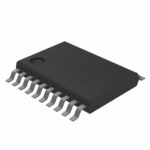 UCC28070APWR
The activity of extra discounts on wholesale prices is in full swing…
Please fill in your contact information and we will send you the latest wholesale price list.





