 ChipApex | Global Electronic Components Supplier
SEARCH
Search Product
Search Post
— IC芯片 | 连接器 | 传感器 | 被动器件 —
Search productSearch post
— IC芯片 | 连接器 | 传感器 | 被动器件 —
Consult the customer manager about the wholesale price.
consultation hotline:86-132-6715-2157
email:[email protected]
Contact the product manager for consultation. One-stop consultation is available.
Do you want a lower wholesale price? Please send us your inquiry and we will reply immediately.
The UCC28070PW is a two-phase interleaved continuous conduction mode (CCM) power factor correction controller manufactured by Texas Instruments. It operates within a supply voltage range of 11V to 21V and supports switching frequencies from 30 kHz to 300 kHz. The device features a maximum duty cycle of 95% and a peak current limit capability. Designed for high-efficiency applications, it achieves a power factor rating greater than 0.9. The component is housed in a TSSOP-20 package and functions reliably across an operating temperature range of -40°C to 125°C.
Verify the specific suffix 'PW' confirms the TSSOP-20 tube packaging variant rather than the tape-and-reel version. Confirm RoHS compliance status as per the latest manufacturer documentation. Ensure the ordering part number matches the required temperature grade and package style for your design specifications.
Select this controller for designs requiring interleaved PFC to minimize filter size and improve thermal performance. It is suitable for applications needing average current mode control with high linearity. Consider the programmable frequency range when designing magnetic components. Evaluate the need for external clock synchronization if precise timing alignment is required.
This component belongs to the UCC28070 family of single-chip interleaved PFC controllers. It is designed to simplify power design for multi-kilowatt systems while increasing reliability. The device represents a solution for improving energy efficiency in commercial and industrial power conversion applications through advanced control algorithms.
Public confirmed substitute part numbers include UCC28060 for lower power applications and UCC28070DWR for SOIC package compatibility. Verify pinout and functional equivalence before substitution.
The interleaved PWM operation generates significantly reduced input and output ripple currents, allowing for simpler and more cost-effective EMI filtering.
It provides phase management capabilities that allow the system to dynamically adjust operating phases based on load demand, enhancing efficiency at light loads.
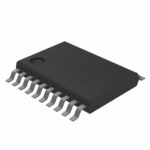 UCC28070PW
The activity of extra discounts on wholesale prices is in full swing…
Please fill in your contact information and we will send you the latest wholesale price list.







