 ChipApex | Global Electronic Components Supplier
SEARCH
Search Product
Search Post
— IC芯片 | 连接器 | 传感器 | 被动器件 —
Search productSearch post
— IC芯片 | 连接器 | 传感器 | 被动器件 —
Consult the customer manager about the wholesale price.
consultation hotline:86-132-6715-2157
email:[email protected]
Contact the product manager for consultation. One-stop consultation is available.
Do you want a lower wholesale price? Please send us your inquiry and we will reply immediately.
The UCC28517NG4 is an advanced Power Factor Correction (PFC) and Pulse Width Modulation (PWM) combination controller manufactured by Texas Instruments. It integrates a PFC controller with a post-regulator PWM controller in a single package to simplify power supply design. The device operates within a temperature range of -40°C to 105°C and utilizes current-mode control techniques for both stages. It is housed in an 8-pin DIP package, designed for through-hole mounting applications requiring high reliability and compact system footprints.
Verify the specific suffix 'G4' indicates lead-free compliance and RoHS status as per manufacturer documentation. Confirm the package type matches the required 8-pin DIP form factor for your PCB layout. Ensure the operating temperature range meets your environmental specifications. Cross-reference the datasheet revision date to ensure compatibility with your design requirements.
Select this component when a combined PFC and PWM solution is required to reduce bill of materials count. Consider the 8-pin DIP package if through-hole assembly is mandated. Evaluate the current-mode control benefits for stability and transient response. Verify that the integrated post-regulator meets the voltage regulation needs of the downstream circuitry without external compensation complexity.
This part belongs to the UCC28517 family of advanced PFC/PWM combination controllers from Texas Instruments. It shares functional similarities with other members like the UCC28517DW but differs in packaging. The family is designed to streamline the design of high-efficiency power supplies by combining two critical control functions into one IC, reducing board space and component count.
Direct replacements include other variants of the UCC28517 family such as the UCC28517DW, provided the package difference is acceptable. Check for equivalent performance in current-mode control and post-regulator capabilities. Ensure thermal and electrical parameters match the original design constraints before substitution.
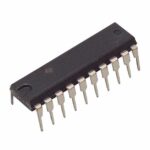 UCC28517NG4
The activity of extra discounts on wholesale prices is in full swing…
Please fill in your contact information and we will send you the latest wholesale price list.





