 ChipApex | Global Electronic Components Supplier
SEARCH
Search Product
Search Post
— IC芯片 | 连接器 | 传感器 | 被动器件 —
Search productSearch post
— IC芯片 | 连接器 | 传感器 | 被动器件 —
Consult the customer manager about the wholesale price.
consultation hotline:86-132-6715-2157
email:[email protected]
Contact the product manager for consultation. One-stop consultation is available.
Do you want a lower wholesale price? Please send us your inquiry and we will reply immediately.
The UCC2919D is a single-channel hot-swap controller manufactured by Texas Instruments, designed for industrial applications within a temperature range of -40°C to +85°C. It operates on a supply voltage between 3V and 8V with a typical operating current of 1 mA. The device is housed in a 16-pin SOIC package (SOIC-Narrow) and supports surface-mount installation. Key electrical characteristics include programmable features such as auto-retry, circuit breaker functionality, adjustable current limiting, fault timeout settings, and latching fault protection.
Verify the specific suffix designation against official datasheets to confirm package type and temperature grade. Confirm RoHS compliance status through manufacturer documentation. Check for end-of-life notifications or obsolescence warnings prior to finalizing procurement plans. Ensure compatibility with existing PCB footprints for the 16-SOIC package.
Select this component when designing systems requiring precise control over inrush current and fault handling during hot-swap operations. Consider the 16-pin SOIC footprint for layout constraints. Evaluate the need for programmable delay and current limit settings against specific load requirements. Verify that the 3V to 8V supply range aligns with the system's available rail voltages.
The UCC2919 belongs to Texas Instruments' family of hot-swap controllers, which manage power insertion into live circuits without causing voltage droops or damage. These devices are critical for maintaining system availability in modular architectures where components must be replaced while powered. The series emphasizes reliability and ease of integration for high-density power designs.
Publicly confirmed substitute part numbers are not available in the provided source material. Consult official Texas Instruments documentation for potential legacy replacements or pin-compatible alternatives if this specific model is discontinued.
The UCC2919D operates within a supply voltage range of 3V to 8V.
Yes, the device includes programmable auto-retry functionality to automatically attempt recovery after a fault condition clears.
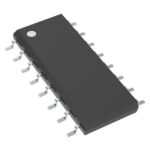 UCC2919D
The activity of extra discounts on wholesale prices is in full swing…
Please fill in your contact information and we will send you the latest wholesale price list.





