 ChipApex | Global Electronic Components Supplier
SEARCH
Search Product
Search Post
— IC芯片 | 连接器 | 传感器 | 被动器件 —
Search productSearch post
— IC芯片 | 连接器 | 传感器 | 被动器件 —
Consult the customer manager about the wholesale price.
consultation hotline:86-132-6715-2157
email:[email protected]
Contact the product manager for consultation. One-stop consultation is available.
Do you want a lower wholesale price? Please send us your inquiry and we will reply immediately.
The UCC5618PWPTR is a dual-channel digital isolator manufactured by Texas Instruments, designed for high-speed signal transmission across isolation barriers. It features a wide operating supply voltage range of 3.0 V to 5.5 V for both the input and output sides, ensuring compatibility with various logic families. The device supports data rates up to 150 Mbps, providing reliable communication in noisy environments. Packaged in a 16-pin TSSOP (PW) format, it integrates robust ESD protection rated at ±15 kV (HBM). Key electrical characteristics include a propagation delay of typically 7 ns and a common-mode transient immunity of 50 kV/μs, making it suitable for demanding industrial applications requiring galvanic isolation.
Verify the specific suffix PWPTR corresponds to the tape-and-reel packaging variant when sourcing. Confirm the manufacturer's current production status and lead times through authorized distributors. Ensure compliance with RoHS directives and check for any recent design changes that might affect pinout or electrical specifications relative to older revisions.
Select this component when dual-channel isolation with high speed and low power consumption is required. Compare propagation delay and jitter specifications against system timing requirements. Evaluate the thermal performance of the TSSOP-16 package under expected ambient conditions. Consider the availability of complementary single-channel or quad-channel variants if channel count needs adjustment.
The UCC5618 belongs to Texas Instruments' family of digital isolators, which utilize proprietary technology to provide isolation without optical components. This series offers advantages over optocouplers such as longer lifespan, higher speed, and better temperature stability. It serves as a modern replacement for legacy isolation solutions in high-performance digital interfaces.
Direct replacements may include other dual-channel isolators from TI or competitors like ADuM series from Analog Devices. Verify pin-to-pin compatibility and ensure equivalent isolation voltage ratings. Check for differences in supply voltage requirements and propagation delays to maintain system timing margins.
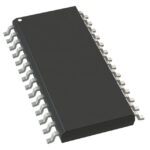 UCC5618PWPTR
The activity of extra discounts on wholesale prices is in full swing…
Please fill in your contact information and we will send you the latest wholesale price list.





