 ChipApex | Global Electronic Components Supplier
SEARCH
Search Product
Search Post
— IC芯片 | 连接器 | 传感器 | 被动器件 —
Search productSearch post
— IC芯片 | 连接器 | 传感器 | 被动器件 —
Consult the customer manager about the wholesale price.
consultation hotline:86-132-6715-2157
email:[email protected]
Contact the product manager for consultation. One-stop consultation is available.
Do you want a lower wholesale price? Please send us your inquiry and we will reply immediately.
The UDA1351H is a single-chip IEC 958 audio decoder with an integrated stereo digital-to-analog converter (DAC) employing bitstream conversion techniques. It operates on a 2.7 V to 3.6 V supply and supports sampling frequencies from 28 kHz up to 100 kHz, including standard rates of 32, 44.1, 48, 64, 88.2, and 96 kHz. The device features an on-chip PLL for clock regeneration, a third-order noise shaper, and a Filter Stream DAC (FSDAC). Key electrical parameters include a typical signal-to-noise ratio of 100 dB at 48 kHz and 96 kHz, with total harmonic distortion plus noise of -85 dB at 0 dBFS. Power consumption is approximately 80 mW in playback mode at 48 kHz.
Verify component authenticity as this part may be discontinued or superseded by newer models. Confirm package integrity for the QFP44 variant, ensuring leads are undamaged. Check manufacturing date codes against current inventory requirements. Validate that the specific ordering suffix matches the required pin configuration and environmental compliance standards documented in the original specification.
Select the UDA1351H when a combined IEC 958 decoder and stereo DAC is required in a single package. Ensure the application supports the 2.7 V to 3.6 V supply voltage range. Choose this component if the design necessitates an internal PLL for clock regeneration from SPDIF inputs. Verify that the QFP44 package dimensions fit the PCB layout constraints and that the L3 or static pin control method aligns with the host controller capabilities.
The UDA1351H is fully pin and function compatible with the UDA1350AH. It belongs to a family of audio codecs designed for cost-effective multi-purpose applications. A related variant, the UDA1351TS, offers similar functionality in an SSOP28 package but lacks certain interface features. This component represents a solution for integrating SPDIF decoding directly into audio processing chains without separate decoder chips.
The UDA1351H is fully pin and function compatible with the UDA1350AH. Designers should verify that any substitute maintains the same QFP44 package and L3 interface timing characteristics. Cross-reference with newer NXP audio codec families if discontinuation is confirmed, ensuring support for 96 kHz sampling and IEC 958 input remains intact.
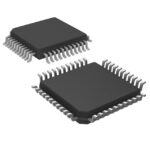 UDA1351H/N1,551
The activity of extra discounts on wholesale prices is in full swing…
Please fill in your contact information and we will send you the latest wholesale price list.





